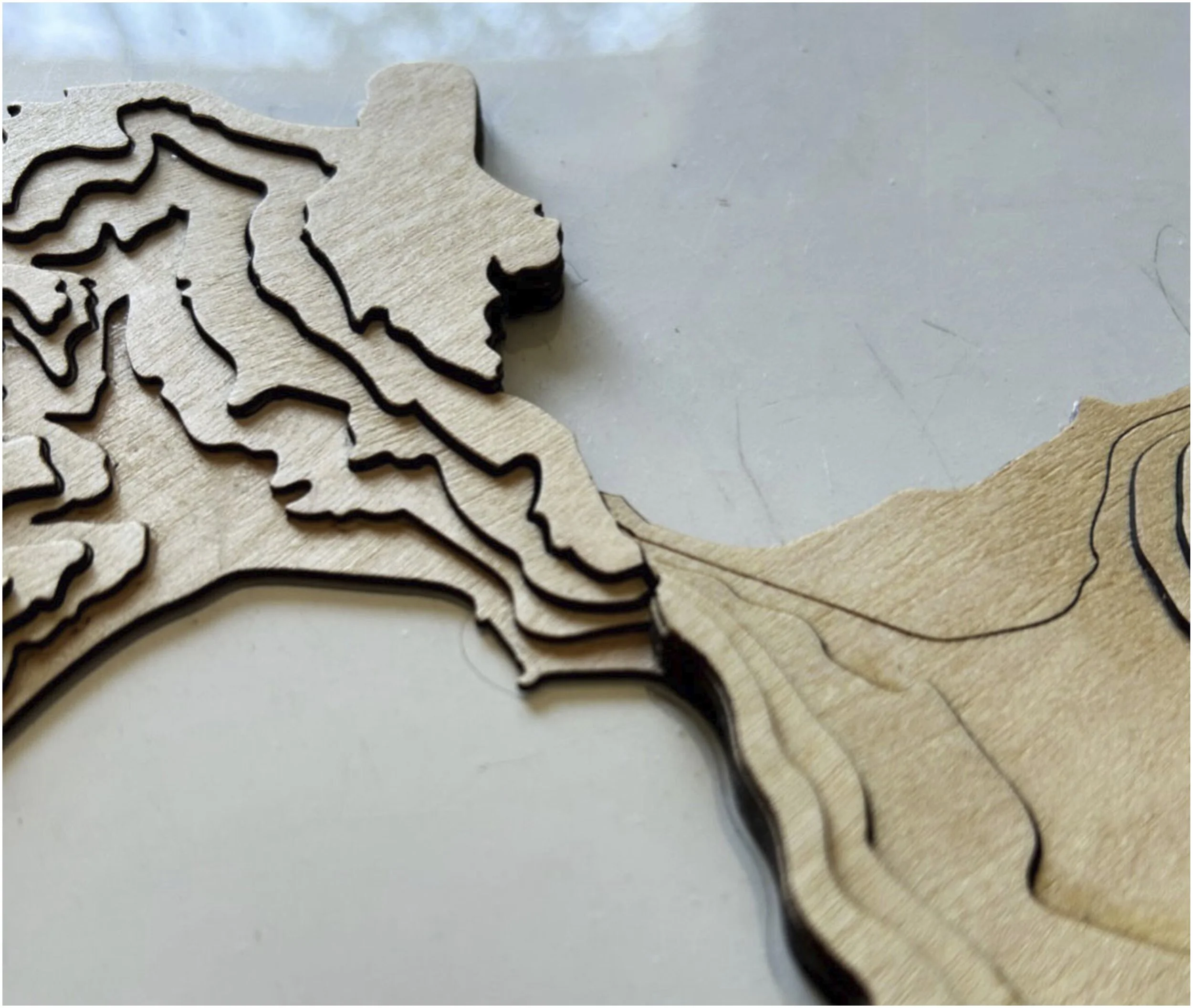
Adjoining pieces of laser-cut plywood matrix used for Annalee Davis’s An Impossible Map print editions; detail showing point of contact between contours representing Scottish Highlands and Scotland District in Barbados (2022).
ABSTRACT: Prints have long been associated with language and communication, yet the subtle processes of production that scaffold their graphic traces often remain a mystery, unseen and entangled with the transitory and social stages of their making. This article follows the collective and multimodal semiosis of a printmaking workshop during a residency with Barbadian artist Annalee Davis, and the co-development of a print edition titled An Impossible Map. This residency was in partnership with the National Trust for Scotland’s project Facing Our Past and Dundee Contemporary Arts Print Studio. Analysis focuses on the significance of texture and touch and the journey towards Davis’s selection of an inkless process resulting in a ‘blind emboss’, offering insights into the critical potential of print to evoke what Davis called the ‘inadequacies of the archive’ regarding historic forced banishments of indentured labourers from Scotland to the Caribbean to support the prosperity of the sugar trade.
Barbadian artist, researcher and cultural activist Annalee Davis undertook a collaborative printmaking residency at Dundee Contemporary Arts (DCA) Print Studio in 2022, commissioned by National Trust for Scotland (NTS) to face ‘the legacy of slavery and empire at [their] properties’ (Melville, 2021).1 This collaboration was led by Annis Fitzhugh, whose professional emphasis was to explore the collaborative possibilities of print as a method of invention. Davis translocated an array of materials and research resources from her studio on a working dairy farm (a former 17th-century sugar plantation) in Barbados, and from the grounds of an NTS estate in the Scottish Highlands, to the print workshop. Through a mutual investigation of these resources in the collaborative environment of the studio, Davis hoped to explore the disappearing narratives of colonial violence and suppressive histories between these two landscapes.
This paper is a reflection on the ensuing discourse and experimentation between Davis and Fitzhugh and the wider print studio team as a range of shared semiotic resources developed through the material and processual possibilities of the print workshop towards the aim of a printed edition as an output.2
Tracing material-semiotic trajectories that encompass the liquidity of papermaking, processes of selection and removal, and the etymological associations of the material processes of print, I consider the historic propensity of printing as a formalising device that can be used to ‘screen out’ (Ahmed, 2017: 32) what information is taken forward and registered in the present.3
In doing so I reflect on what multimodal perspectives towards the collaborative and tactile processes of print may reveal of the systems and hierarchies that shape the presence or absence of information in history’s dominant narratives.
As inherently relational objects, the indexical traces of artists’ prints result from material contact with (and separation from) the textured surface of a ‘matrix’ – a material repository, such as a woodblock or plate, acting as a carrier of the semiotic information that will make the print.4 An image from the matrix may only be imprinted on a paper substrate through a process of touch, pressure, and then removal from the surface of the resultant print.
As textural objects, artists’ prints have often been excluded from art historical canons emphasising a ‘history of vision’ (Yonan, 2011) and been termed problematic, or paradoxical for their implicit processes of contact and removal evoking simultaneous presence and absence, and temporal complexity (Pelzer-Montada, 2018). Existing in a mid-ground between ‘fine’ art, crafts, graphic or design processes, artists’ prints are frequently misattributed as ‘copies’ of originals or unfinished and ‘preparatory’ phenomena.
Using multimodal and socio-semiotic perspectives (Hodge, 2017; Kress, 2010; Newfield, 2014; Van Leeuwen, 2022), my analysis therefore enfolds both the semiotic traces evident in the artist’s resulting prints, and the social, technical and material modes through which their values are activated. In my dual role as both print studio staff member and doctoral researcher during this project, I engaged in collective research, conversations and collaborative reflections during this residency as well as the documentation, interpretation and conservation of the resulting work. As a participant not directly involved in practical production of these prints and non-expert in the technical methods of printmaking, I was able to record the trajectory of exchanges as Fitzhugh aligned the technical and material possibilities of the workshop with Davis’s shared creative concepts.
Materials analysed for this reflection include audio transcripts, digital photographs, fieldnotes, a recorded artist’s talk, and the print editions and material ephemera resulting from this project as well as more formal studio documentation. Informal conversations before and following the culmination of the residency allowed continuity of shared reflections between Davis, Fitzhugh and myself as my research evolved.
Using methods of participation in and observations of the dynamics of the workshop I was able to occupy a transitional space, moving responsively between methods of audio recording, photographic documentation and fieldnotes to capture the material-semiotic trajectories of this residency. As such, I will explore moments of contact and transduction (movement of meaning between semiotic modes) of information during the collaborative development of a matrix for Davis’s print edition titled An Impossible Map (Figure 1)
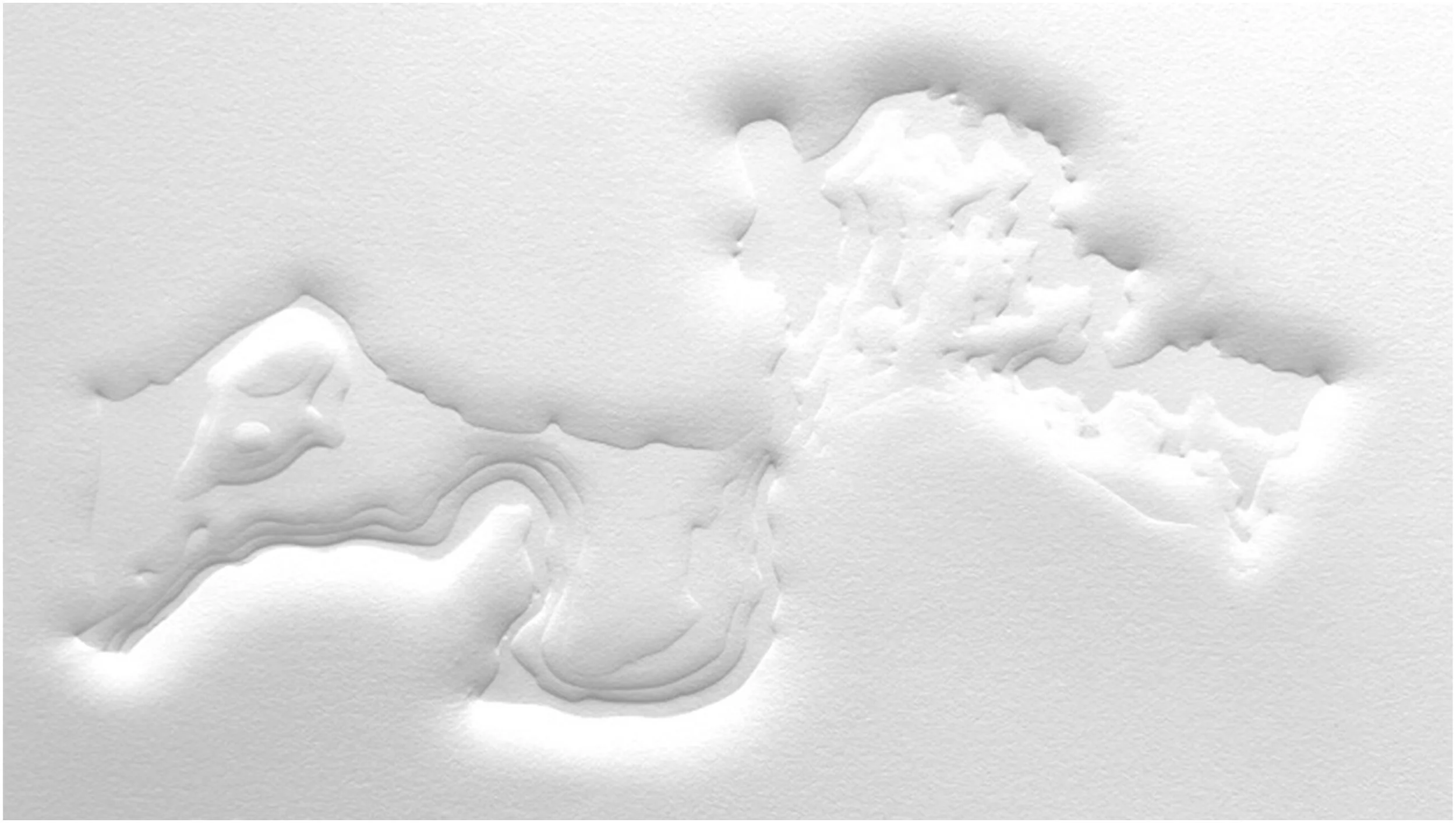
Figure 1. Annalee Davis, A Hymn to the Banished, PART IX: An Impossible Map, 2022 (detail). Relief print of laser-cut plywood model of contour lines from Scotland District of Barbados and Kyle of Lochalsh, Balmacara in the Scottish Highlands on Fabriano 640gsm paper, 29 × 42 cm, Edition of 8. Printed at Dundee Contemporary Arts Print Studio. All artwork copyright © Annalee Davis.
Mapping and composition (tracing cumulative resources)
Resources introduced by Davis into the studio setting included a series of maps and cartographic records (Figure 2). Davis had asserted her interest ‘in the history of mapping and cartography as a way to think about extractive practices’ (Davis, 2022b) and hoped to explore the seldom acknowledged (in Britain) colonial connections between the landscapes of Scotland and Barbados.
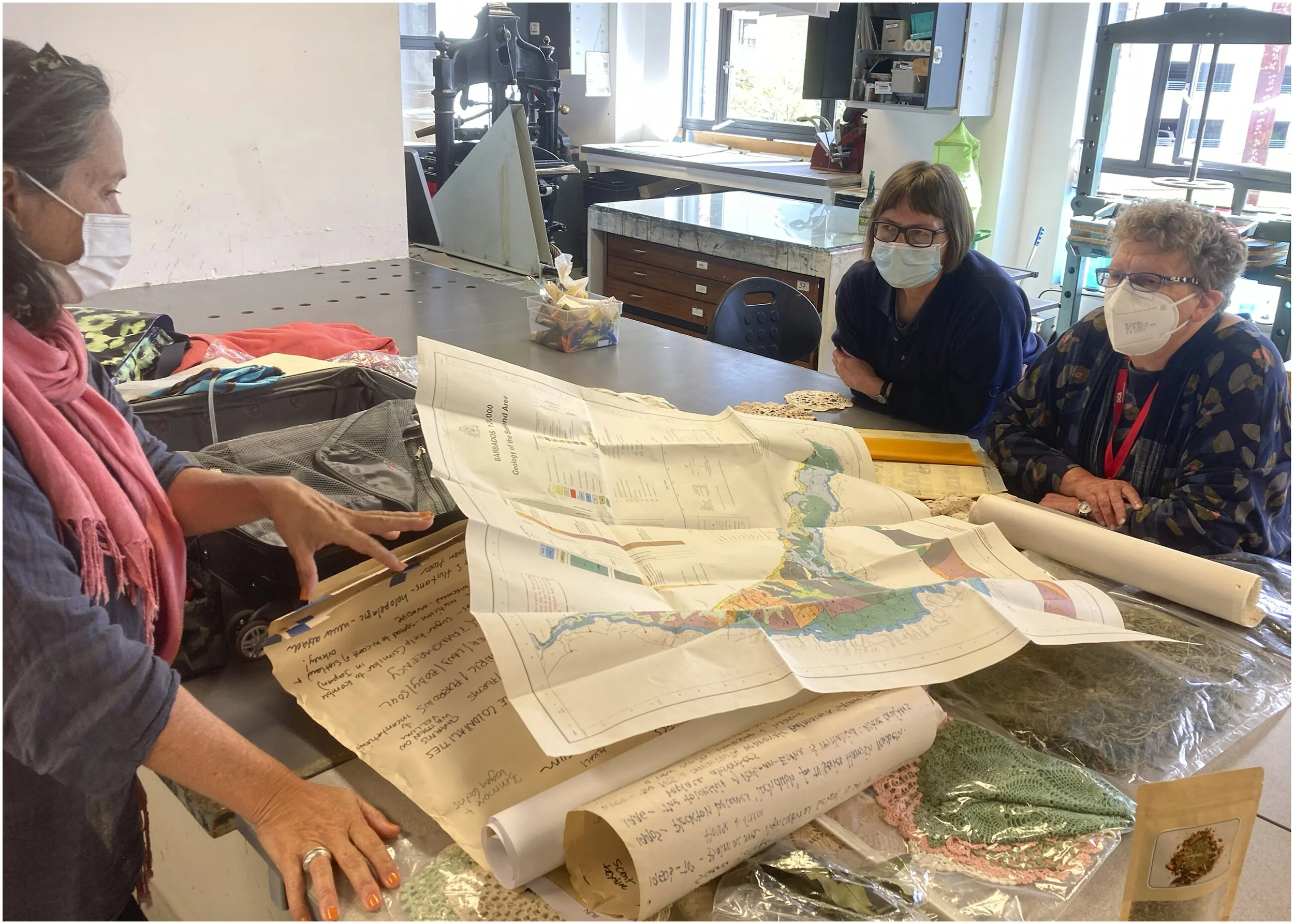
Figure 2. Discussion of geological map showing Scotland District in Barbados in DCA Print Studio alongside other materials (crochet, plants, fishing nets, tea) brought by Davis from the Scottish Highlands or Barbados (From left to right: Annalee Davis, Judith Burbidge, Annis Fitzhugh), 2022.
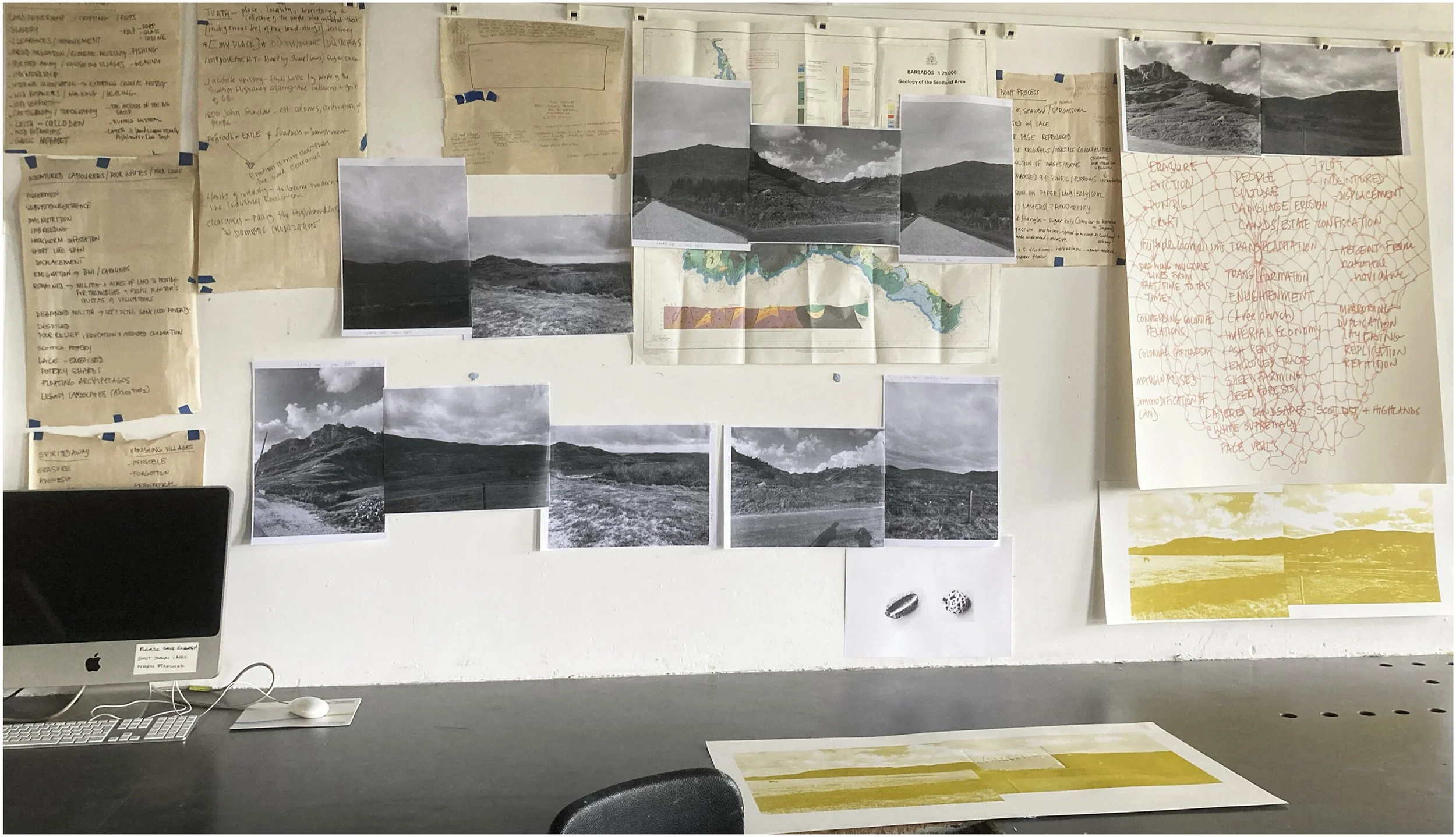
Figure 3. Annalee Davis research material on DCA Print Studio wall during National Trust for Scotland residency, showing Davis’s translocated annotations and maps alongside early Xerox copies and test screenprints produced in the Print Studio, 2022.
It was her intention to share these histories as a way of collective memorialisation and to explore the omissions and what she called ‘inadequacies of the archive’ in print of the legacies of enslavement, indentureship and colonial infrastructures.
Using the print studio wall as a shared repository, a juxtaposition of simple Xerox copies showing two landscapes was displayed: one of the Scotland District in Barbados (so-called by inhabitants for its evocation of the Scottish landscape) and one of the hills near the Balmacara Estate in the Scottish Highlands.5 This estate had been a site for Davis’s initial residency and was connected, she explained, to Barbados and histories of land ownership and enslavement through Lord Seaforth (1754–1815) who had been Governor of the island of Barbados (Davis, 2022a).
As the project began, and Fitzhugh began to consider printing processes that might resonate with Davis’s research, this evolving wall of shared reference images became a focal point, and we spoke frequently of these geographies and their convergence (Figure 3). In reflecting on the landscapes in her artist’s talk towards the end of the residency, Davis explained:
…the Scotland District area in Barbados…many indentured labourers were given small tracts of land after their indentured period, and there was something called ‘vanishing villages’ because there was a lot of clay, and there was a lot of slippage, so sometimes entire villages would disappear…I was interested in the ghostliness of that, because the story of indentureship is not spoken about a lot.
…There's this term called ‘spirited away’. So, people on the British side of the Atlantic were picked up off the street…woke up on a ship, and they were heading across the Atlantic. So, I was interested in the ghostliness of being spirited away, and these vanishing villages in Barbados, where evidence was disappearing of a particular group of people. (Davis, 2022b)
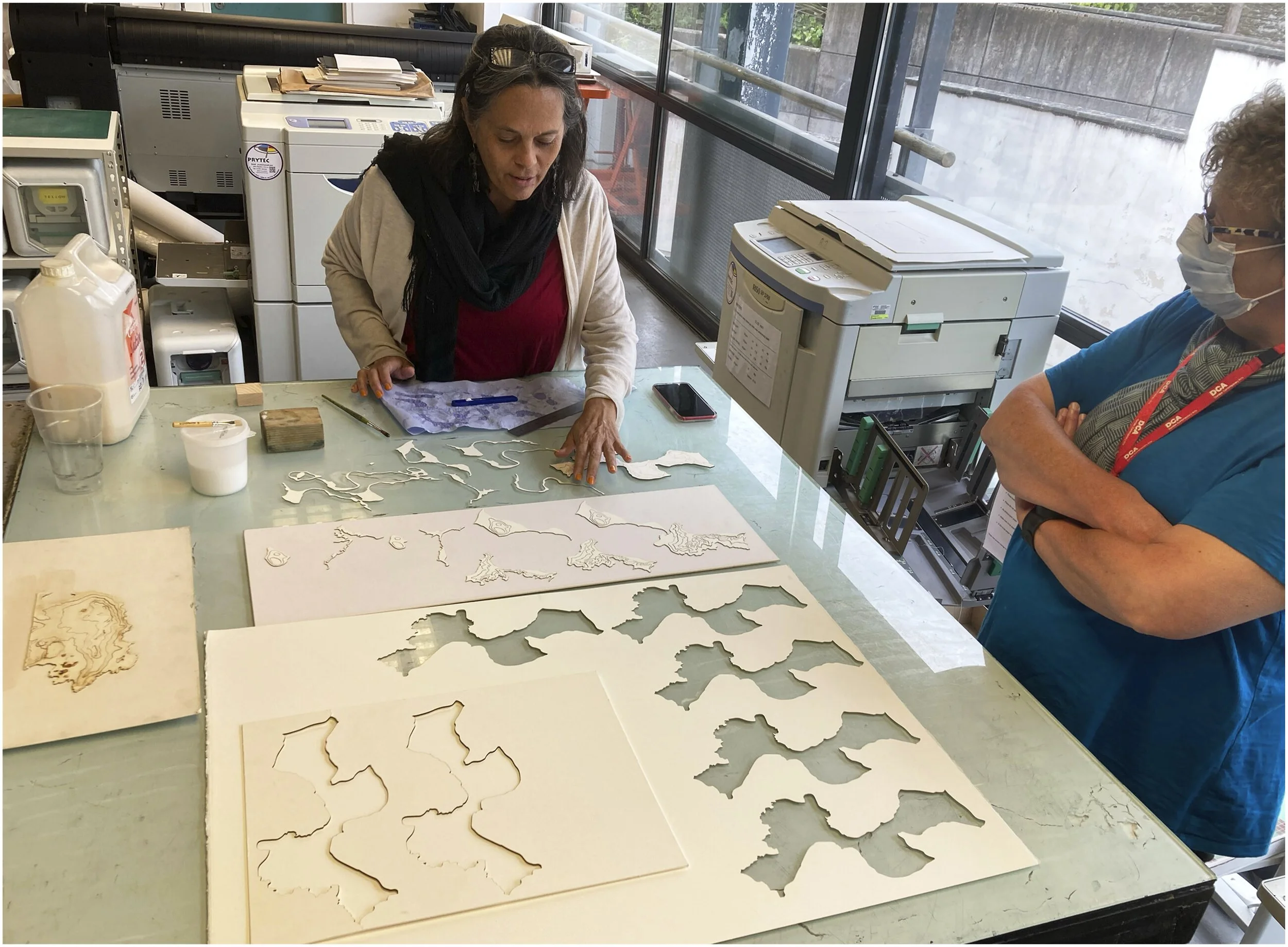
Figure 4. Annalee Davis (left) and Annis Fitzhugh (right) in conversation about laser-cut card using land contour lines from Scotland and Barbados (2022).
Using geological contours from both the Scottish Highlands and Barbados’s Scotland District, two linear maps were traced onto one piece of paper, creating a symbolic land-bridge and establishing an initial site of connection between two narrow points. This ‘transparency’ facilitated further mapping of these contour layers into digital form, so each could be separated, transposed and laser-cut into pieces of card using a process much like jigsaw puzzle fabrication.
Translation of the imagery into three-dimensional pieces afforded their handling and free movement on the surfaces of the studio as they were arranged to assemble a test matrix. With each removal, negative spaces and offcuts were simultaneously created, beginning to reproduce the associations of the landscapes and their connectedness through practices of selection and removal, and presence or absence of each piece (Figure 4).
The matrix (a tactile carrier)
The card layers were glued into a three-dimensional relief evoking the landforms, with graduated and tangible contours that might be tested as a print matrix. (Figure 5).
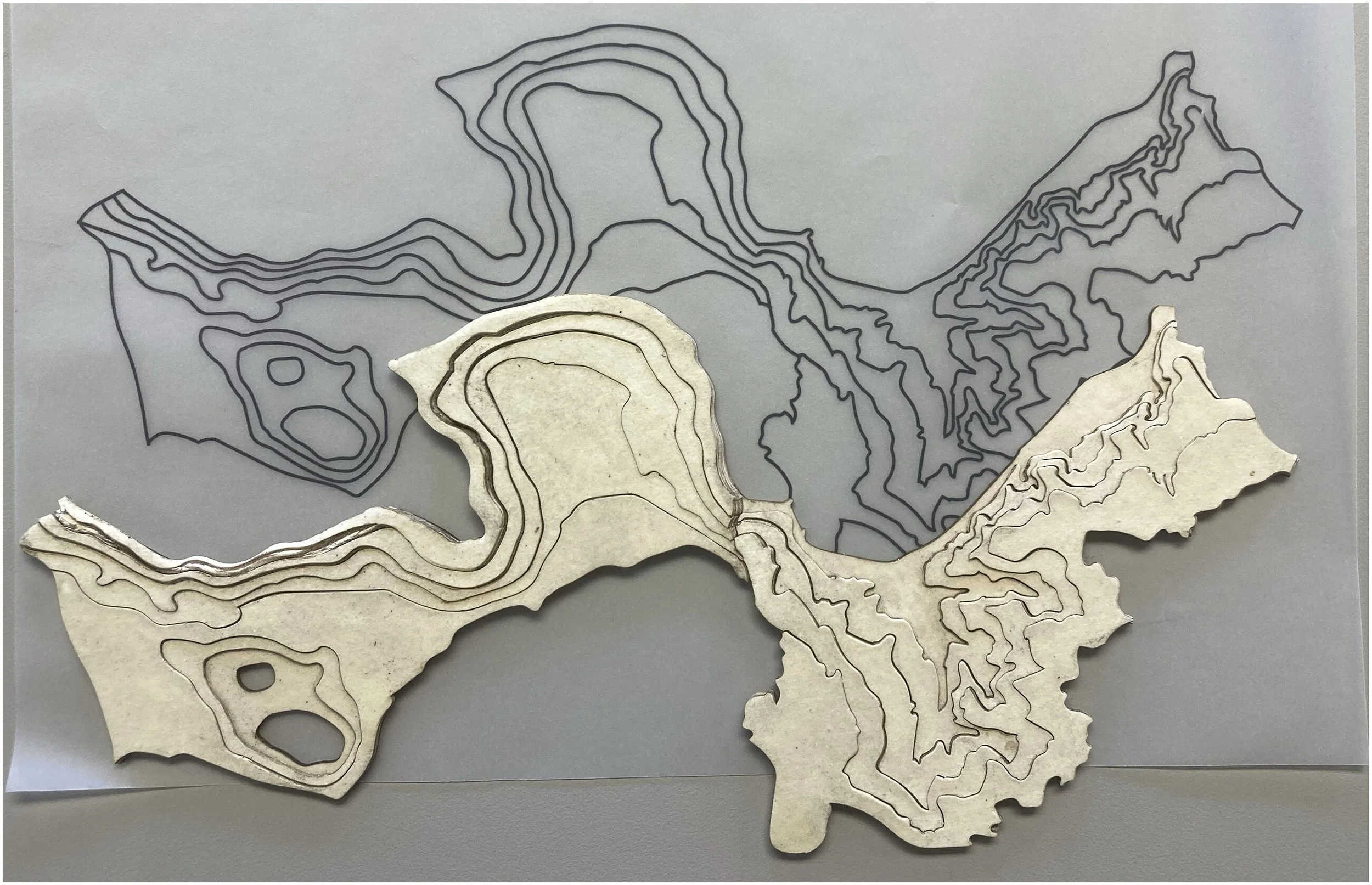
Figure 5. Tracing paper transparency showing land contour lines from Scotland and Barbados alongside laser-cut card, 2022.
During earlier experimentation, Fitzhugh had suggested handmaking paper: soaking liquified paper pulp fibres for Davis to observe and feel the textures and impressions yielded by inclusions of seaweeds, plant matter, textiles, a fishnet, each originating from either Barbados or the Scottish Highlands, as the liquid fibres dried and took the form of a paper mould (Figure 6).
There was a lot of experimenting, pushing with the fishnet into handmade paper that was made from seaweed that I brought from Barbados, and seaweed from…lots of things that didn't end up in the final project but certainly became an important part of it (Davis, 2022b).
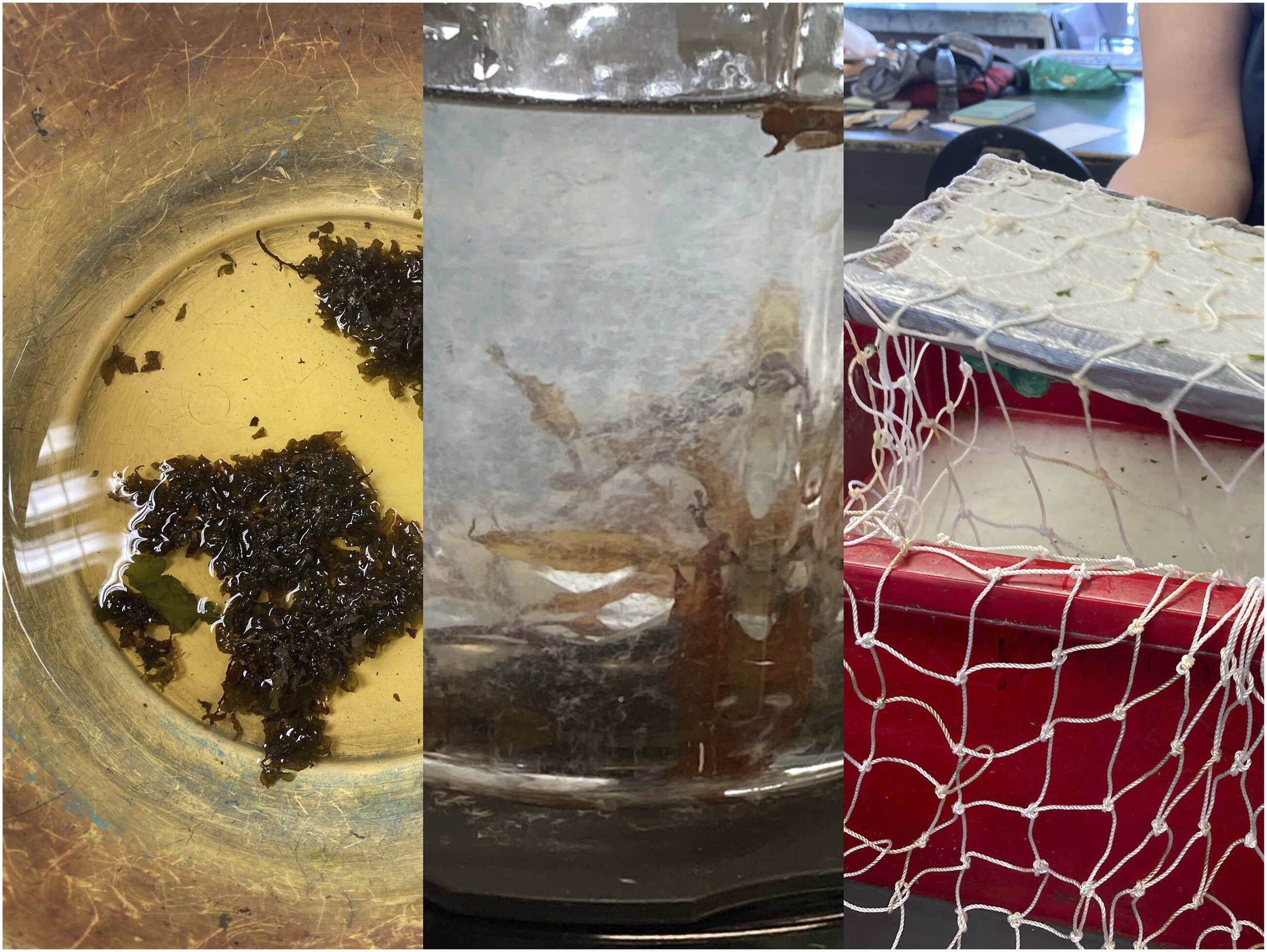
Figure 6. Experimentation with handmaking paper pulp for papermaking using fish net and seaweed, DCA Print Studio, 2022.
For further context on the project and its resulting works, see Annalee Davis’s A Hymn to the Banished