In Minor Keys, 61st International Art Exhibition curated by Koyo Kouoh. On view in the Corderie and in the Giardini
Annalee Davis presents new and recent works exploring ecological memory, botanical knowledge, and post-plantation futures in the Caribbean.
(i) Let This Be My Cathedral
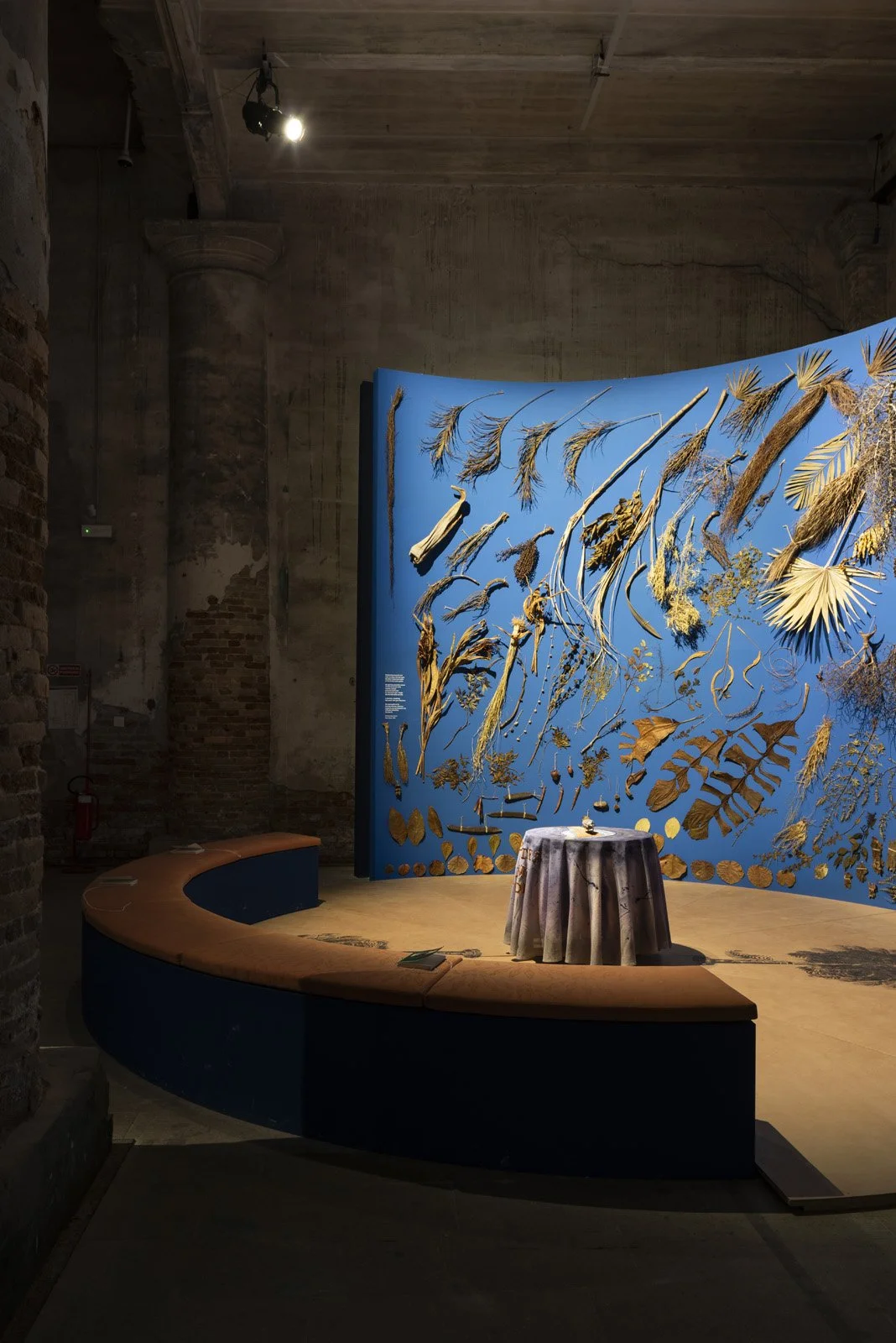
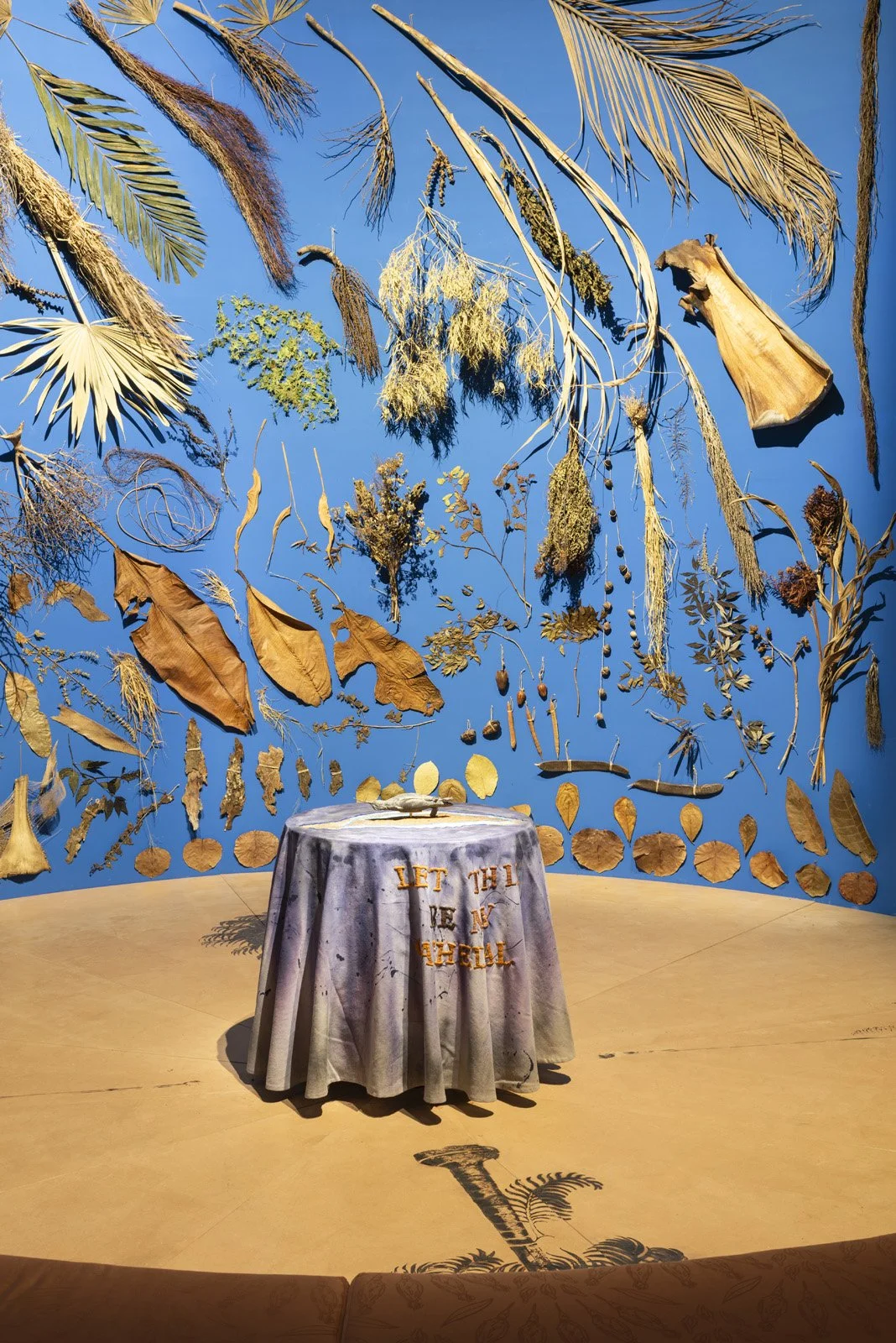
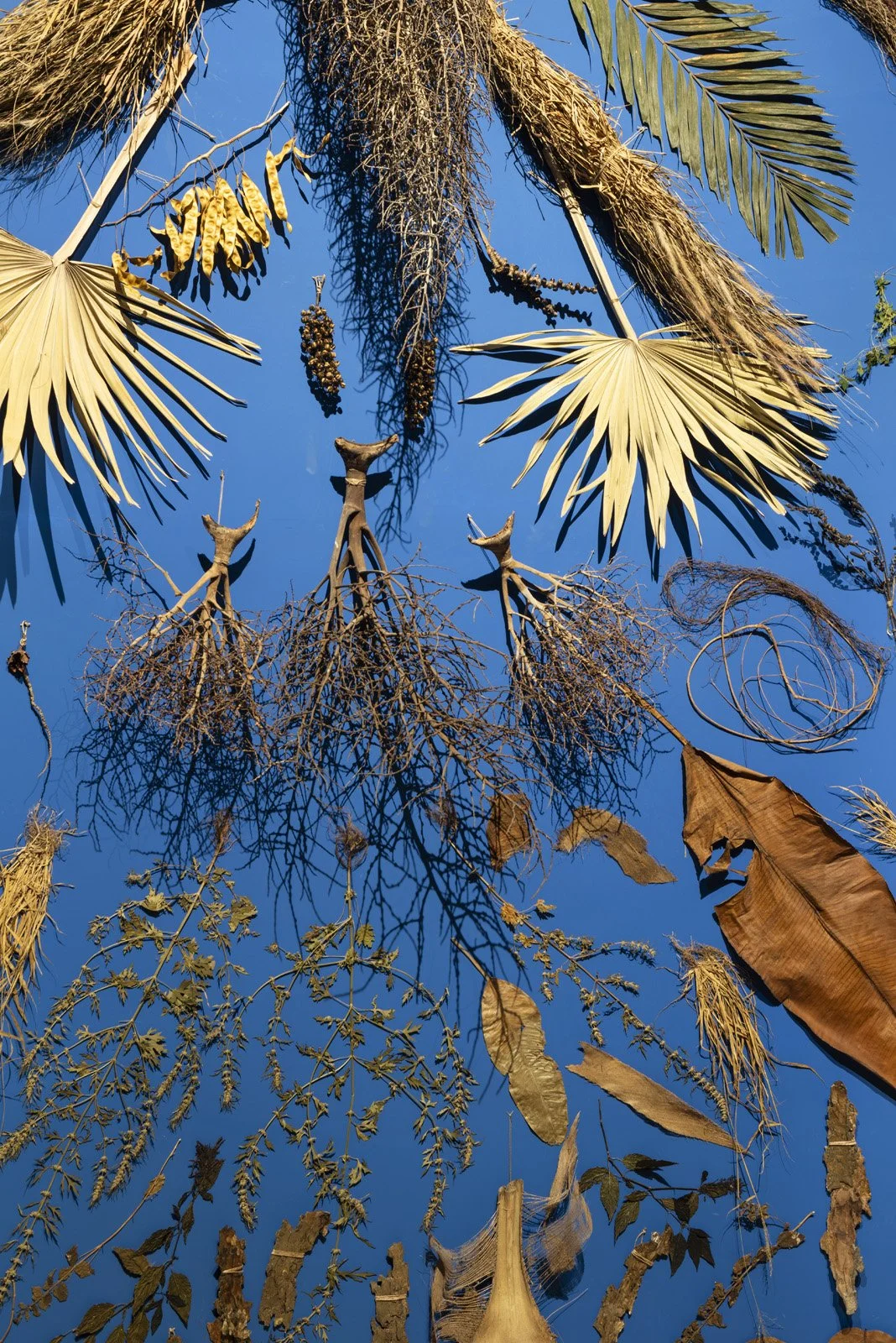
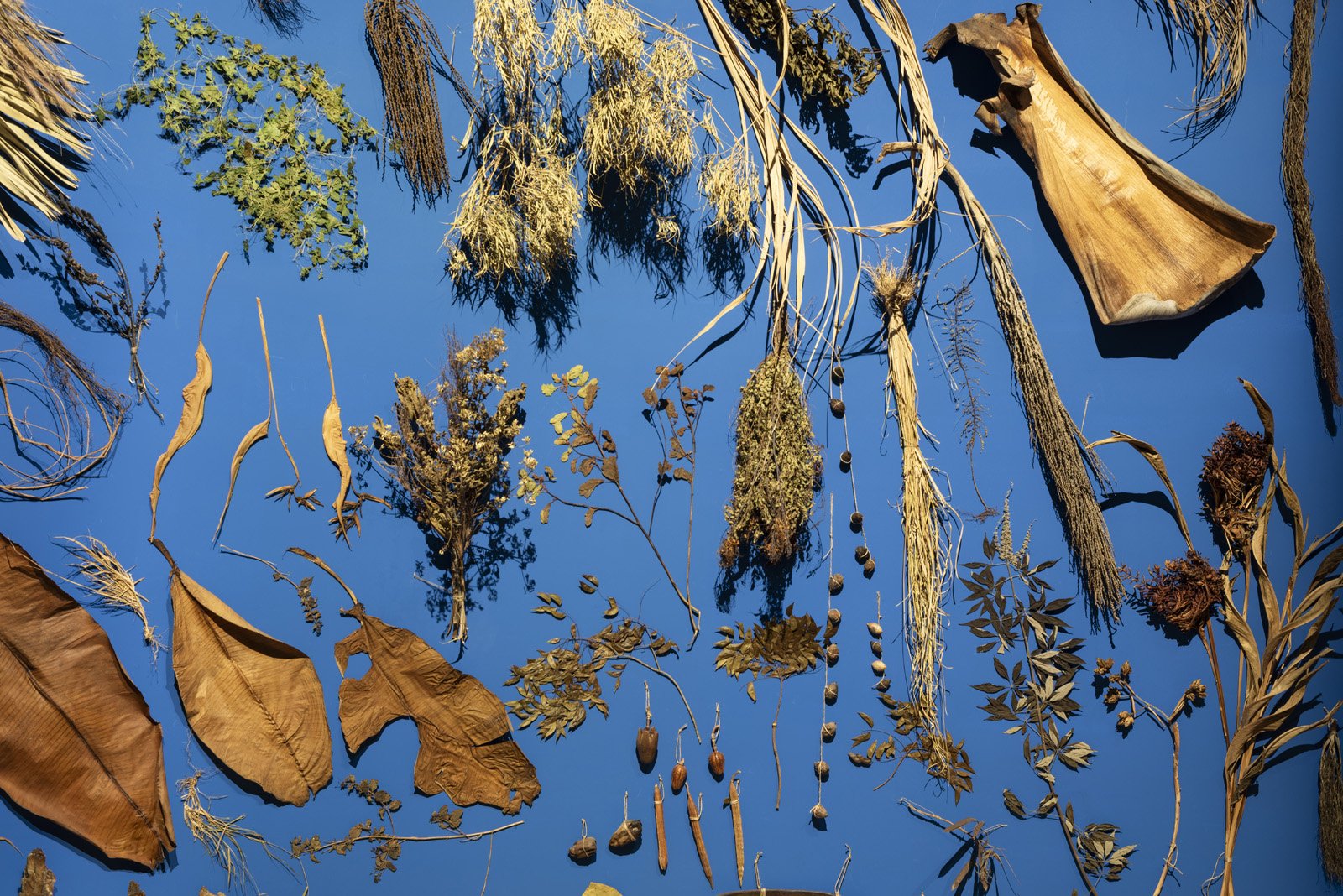
Collection Title: Let This Be My Cathedral (detail)
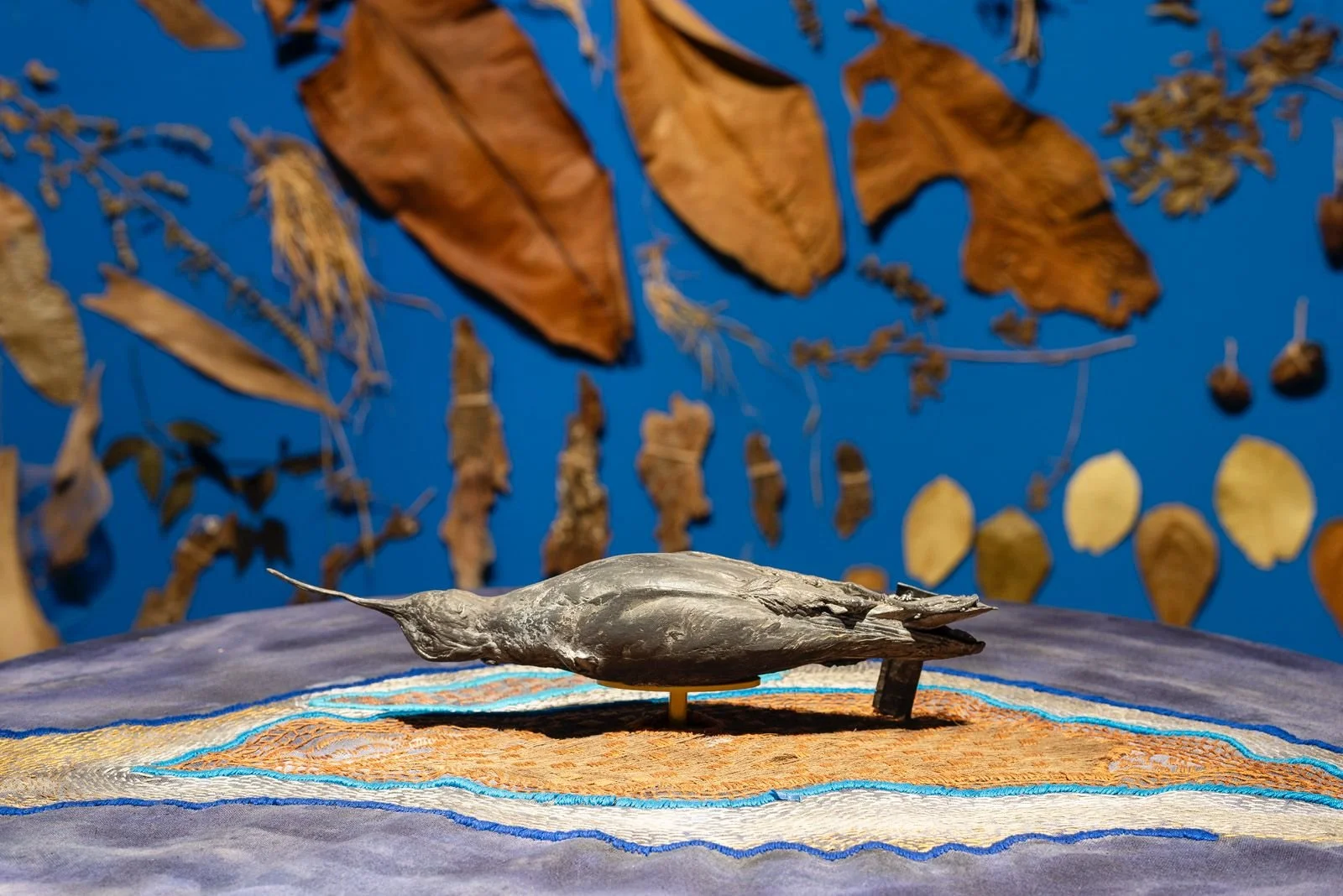
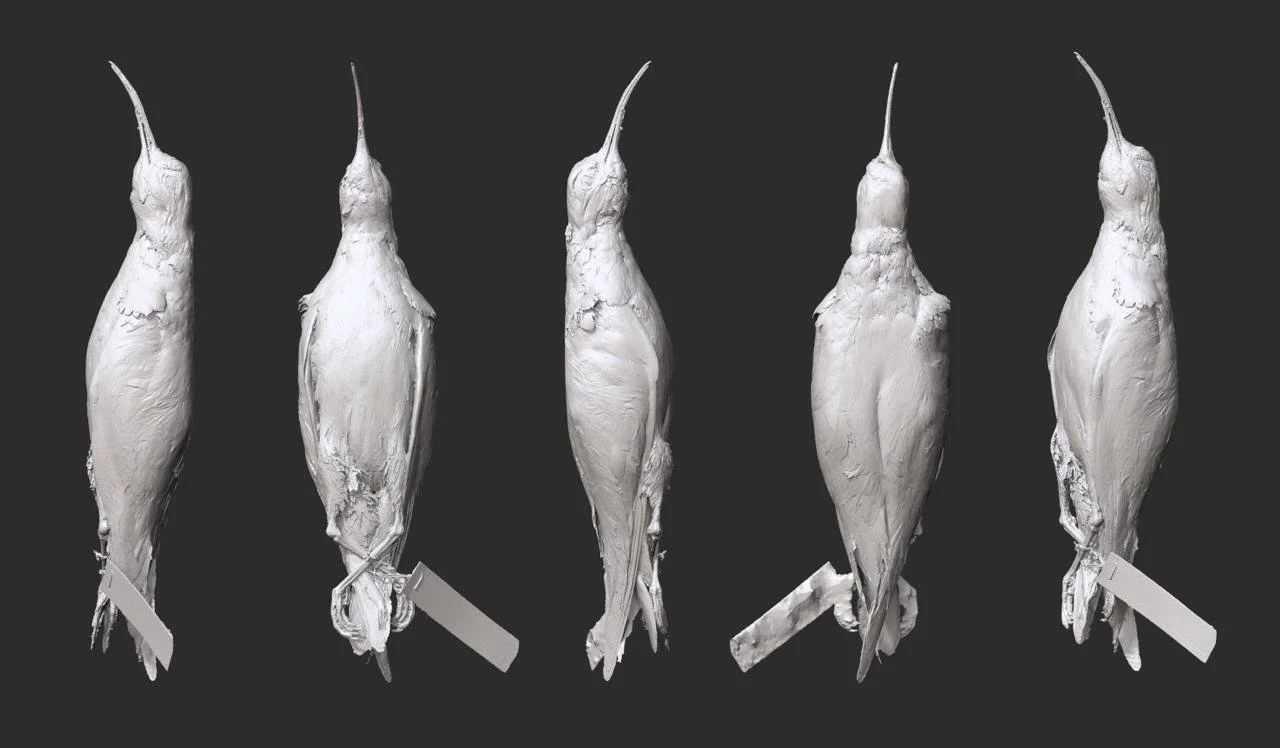
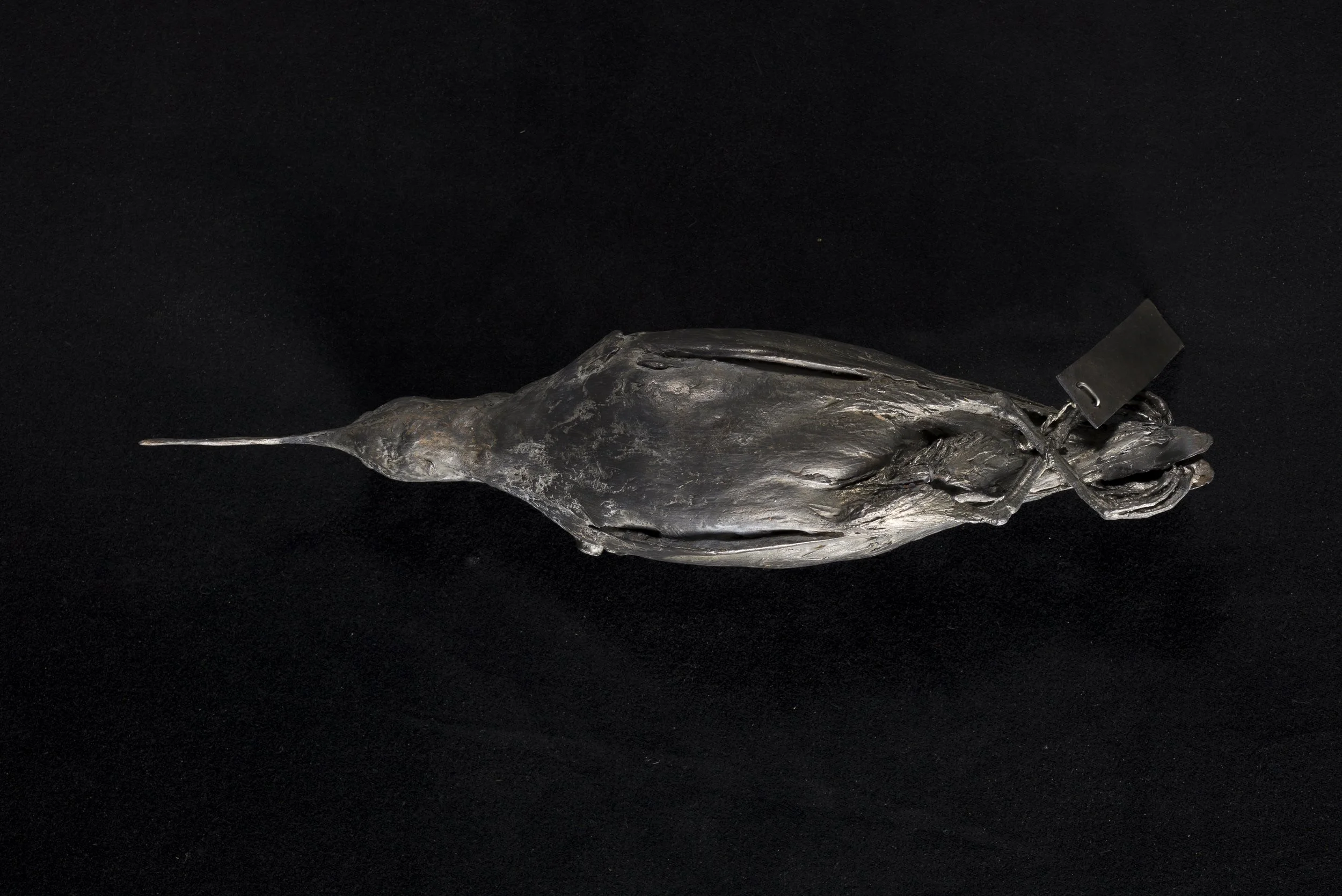
Medium: Lead cast of Eskimo Curlew shot down in Barbados in September 1963, reconstructed from high-resolution photogrammetry recording
Year: 2026
Made in collaboration with Factum Foundation
Photo credit: Matteo Losurdo
Let This Be My Cathedral (2026) is a new installation reflecting on species loss and ecological memory, grounded in the story of the Eskimo curlew—the last recorded sighting of which in Barbados occurred in 1963.
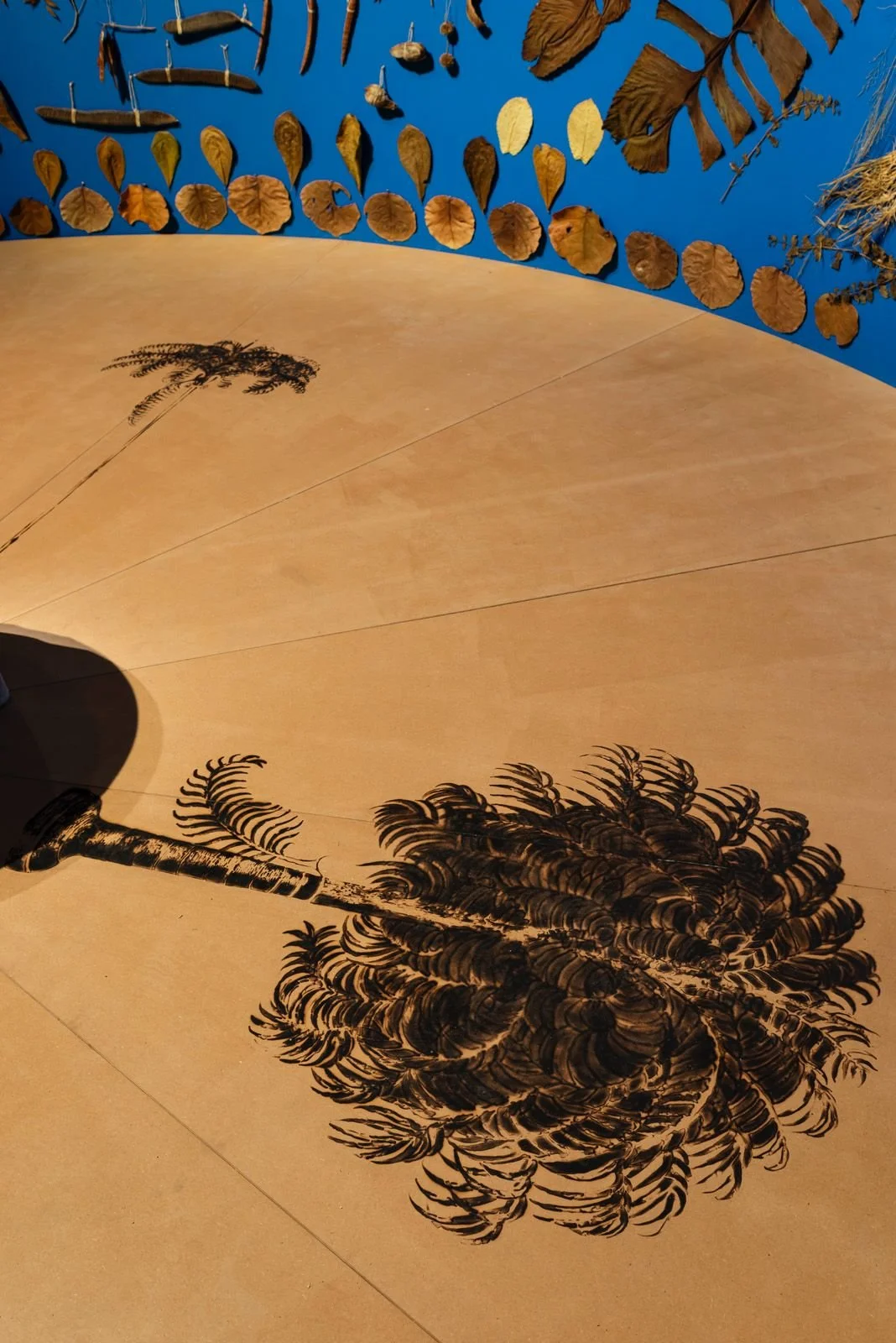
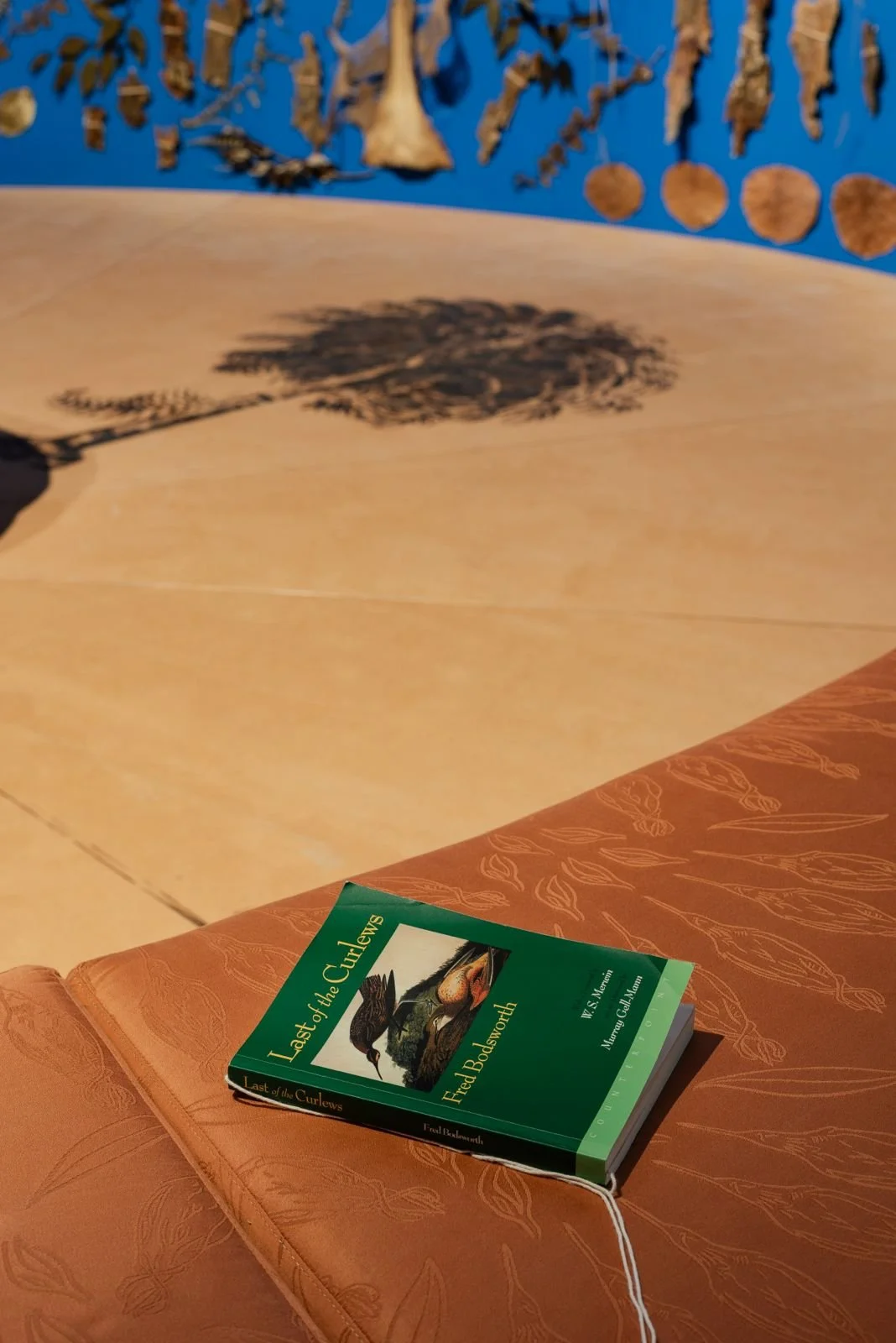
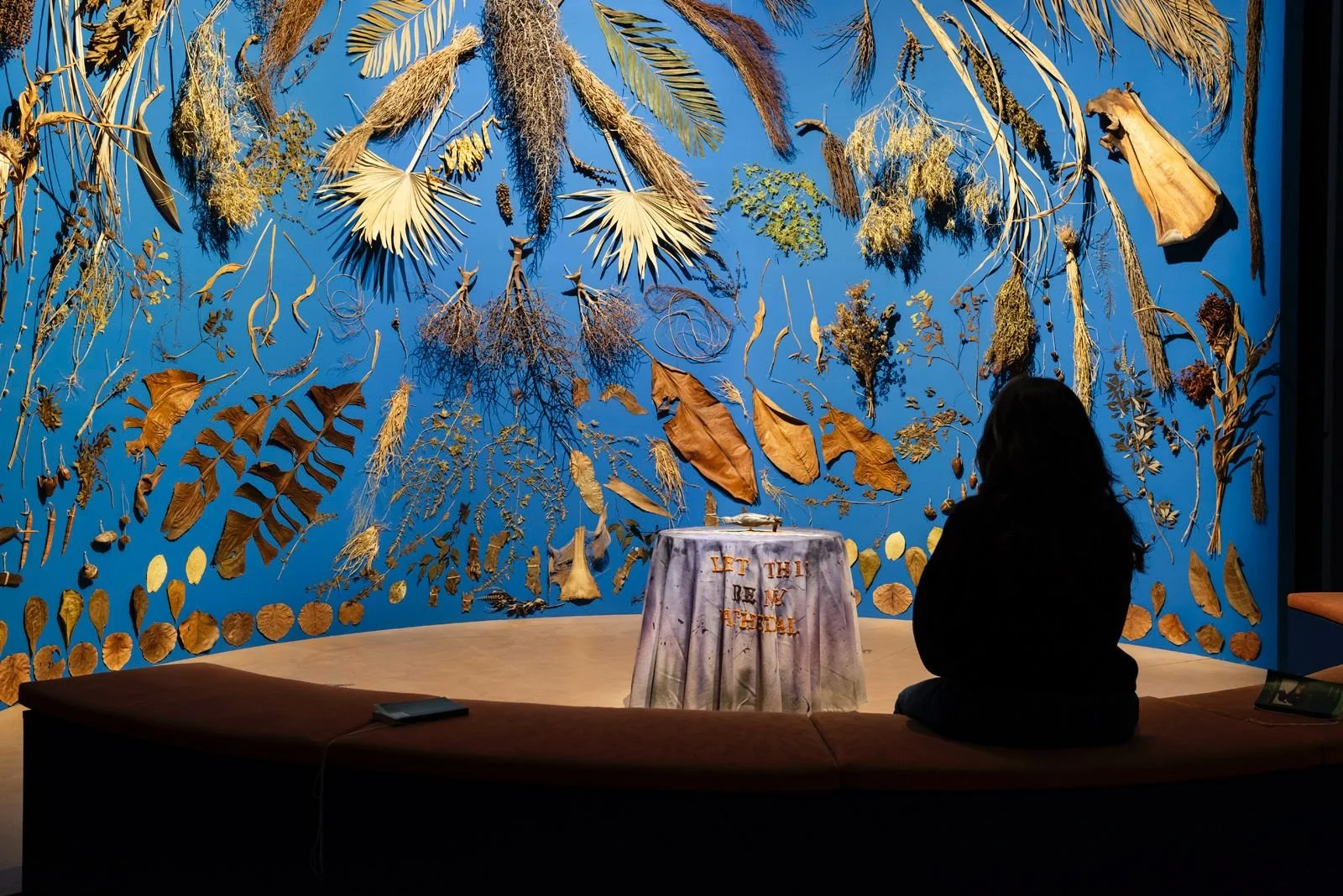
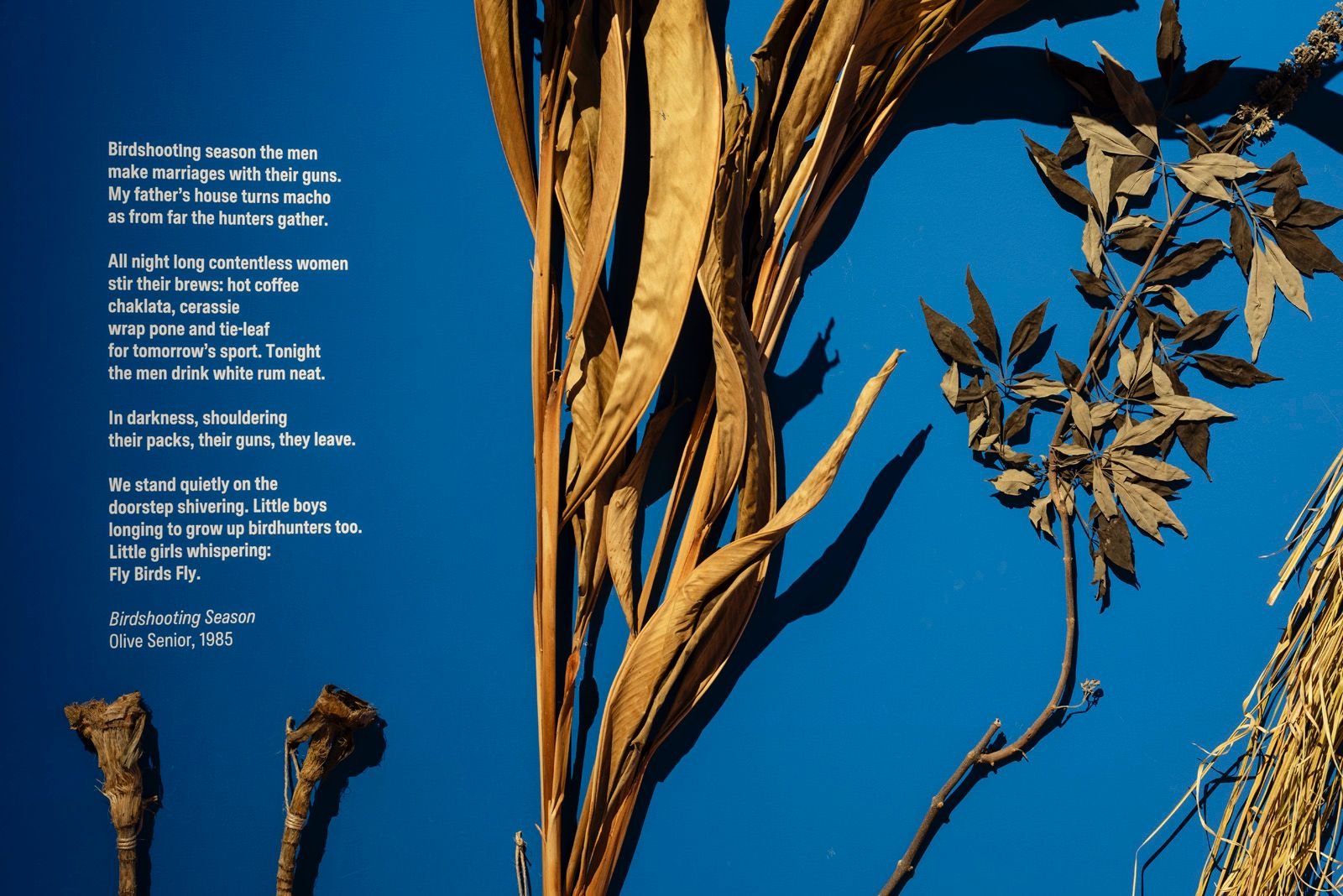
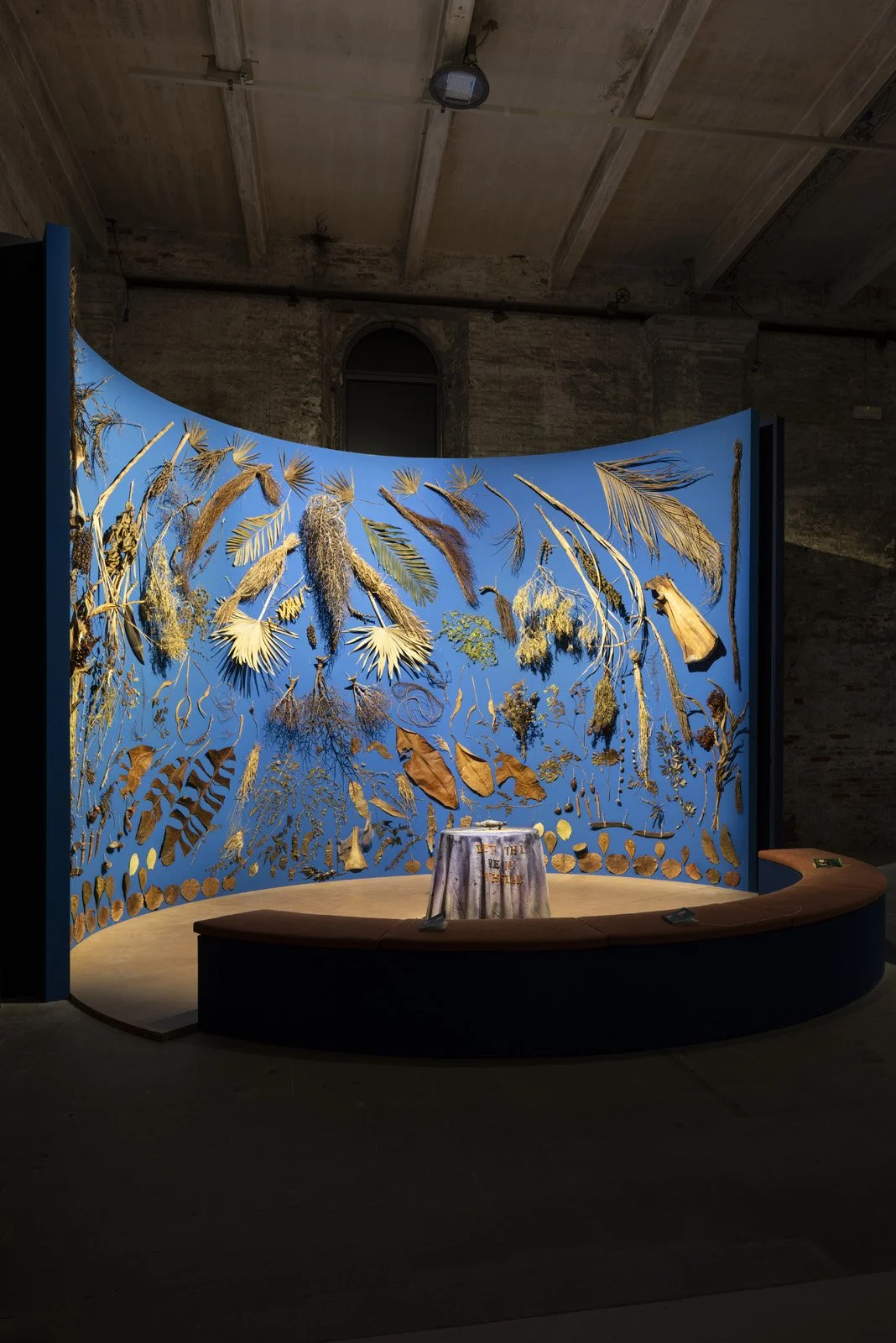
A multimedia installation anchored in ecological grief, colonial memory, and reverential acts, Let This Be My Cathedral offers a sanctum for critical meditation on biodiversity loss and the emotional and environmental residues of the plantationocene. Through a composite of organic material including fronds, leaves, inflorescences, seeds and pods, a to-scale lead cast of a now- extinct Eskimo curlew resting on a hand-embroidered and dyed shroud, a Damask covered seating area, the transfer of 17th-century drawings of Royal Palms burnished on the floor, and the poem Birdshooting Season by Jamaica’s poet laureate Olive Senior, Let this be my Cathedral proposes a contemplative space where remembrance, ritual, and renewal converge, inviting viewers to pause, mourn and be inspired.
![4.1_Copy of Banana leaf + male flower [Musa x] - detail from Let This Be My Cathedral.jpg](https://images.squarespace-cdn.com/content/v1/5f04d5206bf5a25a0360e8dd/1776029466462-7JO461KYEOPG5AZ0JC7L/4.1_Copy+of+Banana+leaf+%2B+male+flower++%5BMusa+x%5D+-+detail+from+Let+This+Be+My+Cathedral.jpg)
![4.2_Copy of Cerasee [Momordica charantia] - detail from Let This Be My Cathedral.jpg](https://images.squarespace-cdn.com/content/v1/5f04d5206bf5a25a0360e8dd/1776029453813-2NLH267TDXOWBB026FN3/4.2_Copy+of+Cerasee+%5BMomordica+charantia%5D+-+detail+from+Let+This+Be+My+Cathedral.jpg)
![4.3_Copy of Sea Grape [Coccoloba uvifera] & Wild anthurium [Anthurium willdenowii] - detail from Let This Be My Cathedral.jpg](https://images.squarespace-cdn.com/content/v1/5f04d5206bf5a25a0360e8dd/1776029452524-BNVAB14JMFPMWR5UNV8Y/4.3_Copy+of+Sea+Grape+%5BCoccoloba+uvifera%5D+%26+Wild+anthurium+%5BAnthurium+willdenowii%5D+-+detail+from+Let+This+Be+My+Cathedral.jpg)
![4.4_Copy of Motherwort [Leonurus japonicus] - detail from Let This Be My Cathedral.jpg](https://images.squarespace-cdn.com/content/v1/5f04d5206bf5a25a0360e8dd/1776029462984-T9L6VKP43CYFFYDLSPJZ/4.4_Copy+of+Motherwort+%5BLeonurus+japonicus%5D+-+detail+from+Let+This+Be+My+Cathedral.jpg)
Collection Title: Let This Be My Cathedral
Medium: Pressed plants for the herbarium including (1) Banana leaf + male flower [Musa x]; (2) Cerasee [Momordica charantia]; (3) Sea Grape [Coccoloba uvifera] & Wild anthurium [Anthurium willdenowii]; (4) Motherwort [Leonurus japonicus]; (vii) .
Year: 2026
Photo credit: RStudio
“Let This Be My Cathedral” (2026). Wall-based herbarium sourced from the artist’s home garden in Barbados. Installation view in In Minor Keys, the International Art Exhibition of the 61st Venice Biennale, Arsenale. By Matteo Losurdo
Embedded in Barbados’ natural and cultural history, the work emerges from several interrelated historical, contemporary, environmental, and personal reference points:
(i) The Great Clearing (1650–1665) – a catastrophic era of deforestation throughout the British and French Caribbean that permanently altered the region’s ecology.
(ii) The extinction of the Eskimo curlew (Numenius Borealis) in Barbados on September 4th, 1963, by sporting shooting, marked the end of a species of bird once so abundant it darkened the skies of the Americas. Assumed as the last of its species, its wide-scale slaughter and subsequent demise mostly took place in North America before its mistaken shooting in Barbados in a flock of Golden plover.
(iii) The small garden surrounding my home and studio from which I have gathered, pressed, and dried organic materials and which inspires the notion of this site as a cathedral.
(iv) A call to love and finding delight, even as we face ongoing environmental collapse and emotional fatigue.
Together, these references articulate an ecology of loss, vulnerability, and fortitude, interrogating the ways in which the Caribbean has been shaped by both centuries of devastating deforestation, violent colonial practices, and acts of devotion. The semi-circular-shaped sanctuary is presented as a secular cathedral rooted in postcolonial memory and a present-day urge to take care of what is broken.
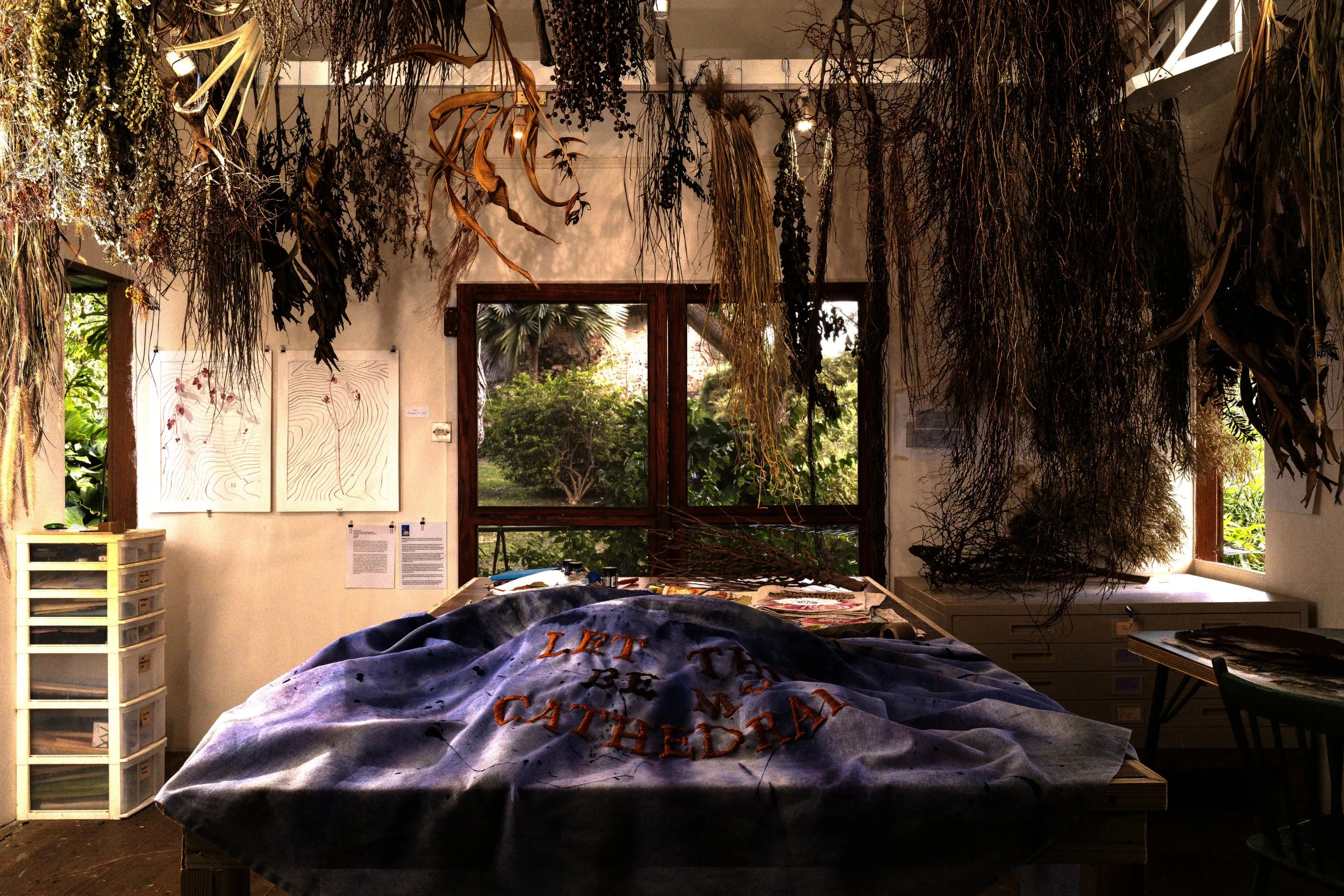
Title: Let This Be My Cathedral (detail)
Medium: The artist's studio with hanging plants
Year: 2026
Photo credit: RStudio

Title: Let This Be My Cathedral (detail)
Medium: Annalee Davis embroidering in her garden
Year: 2026
Photo credit: RStudio
(ii) Textile works at the Giardini
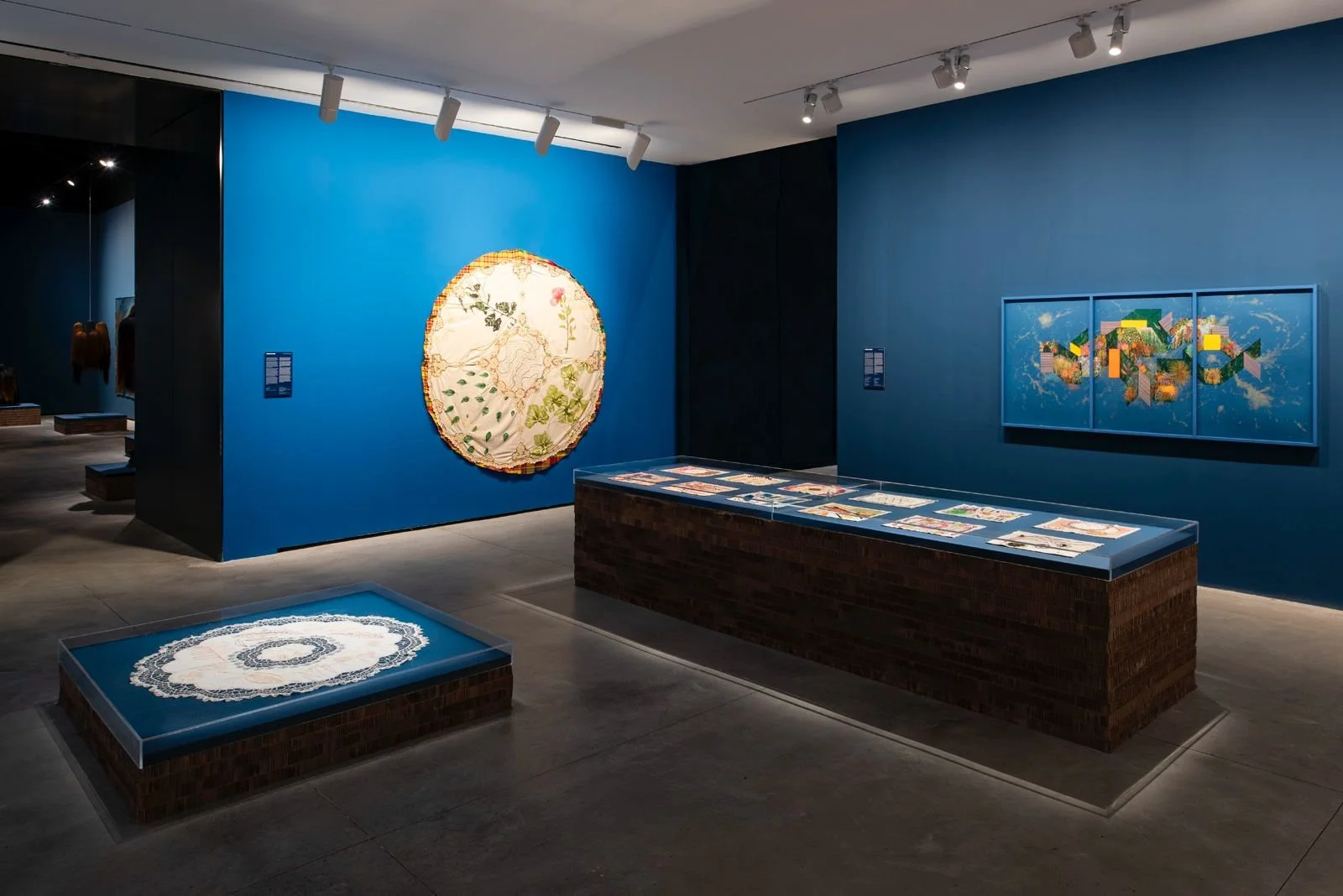
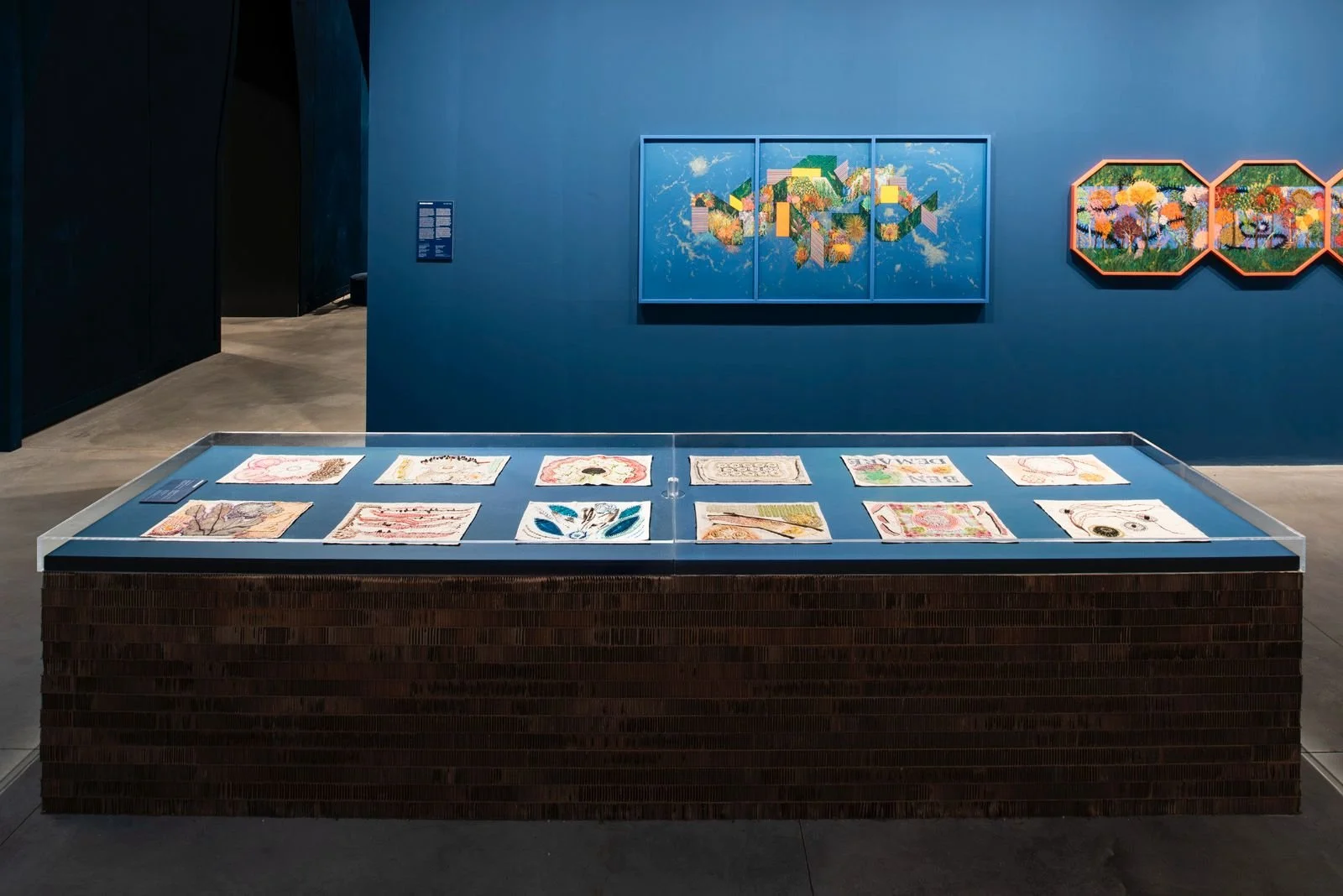
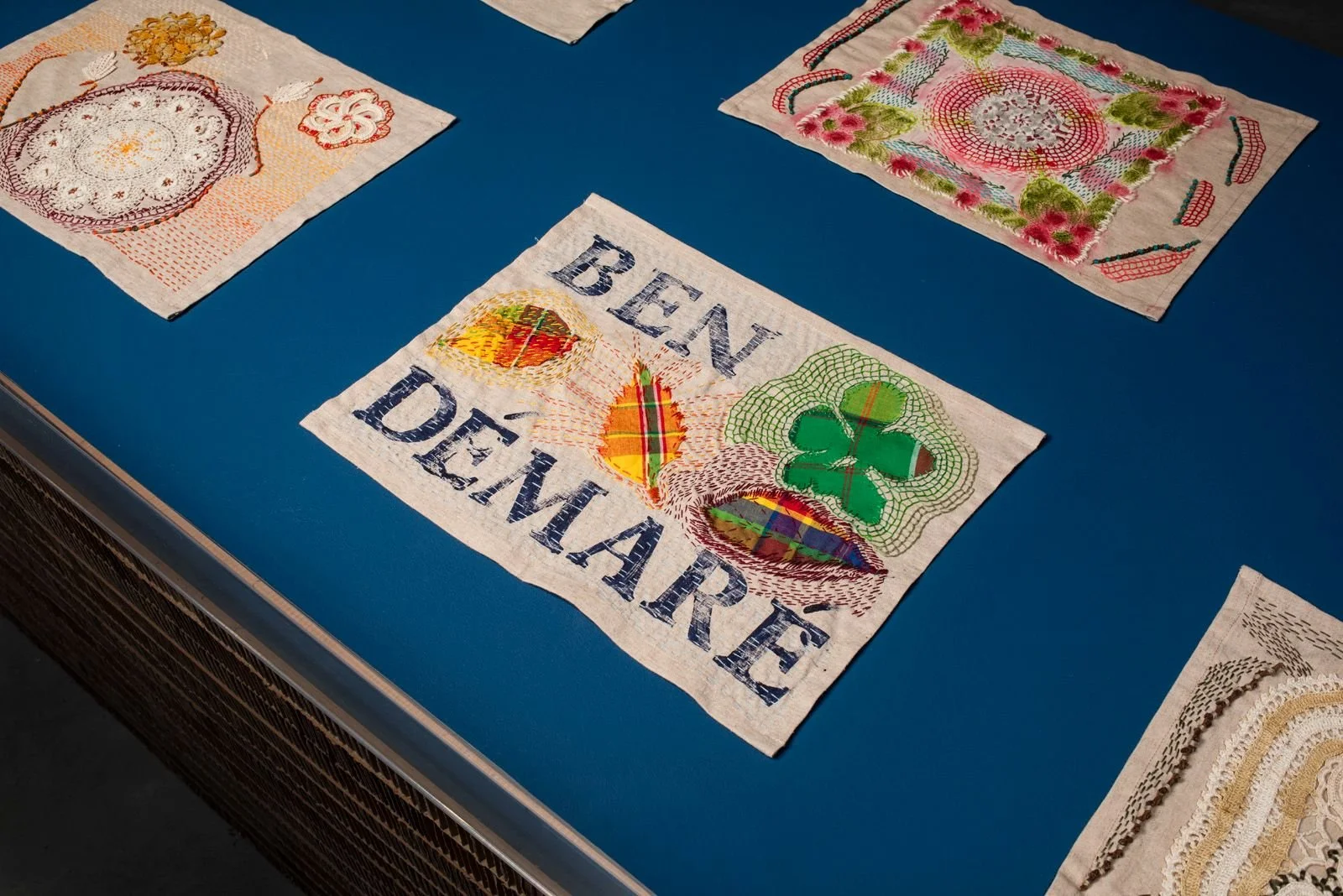
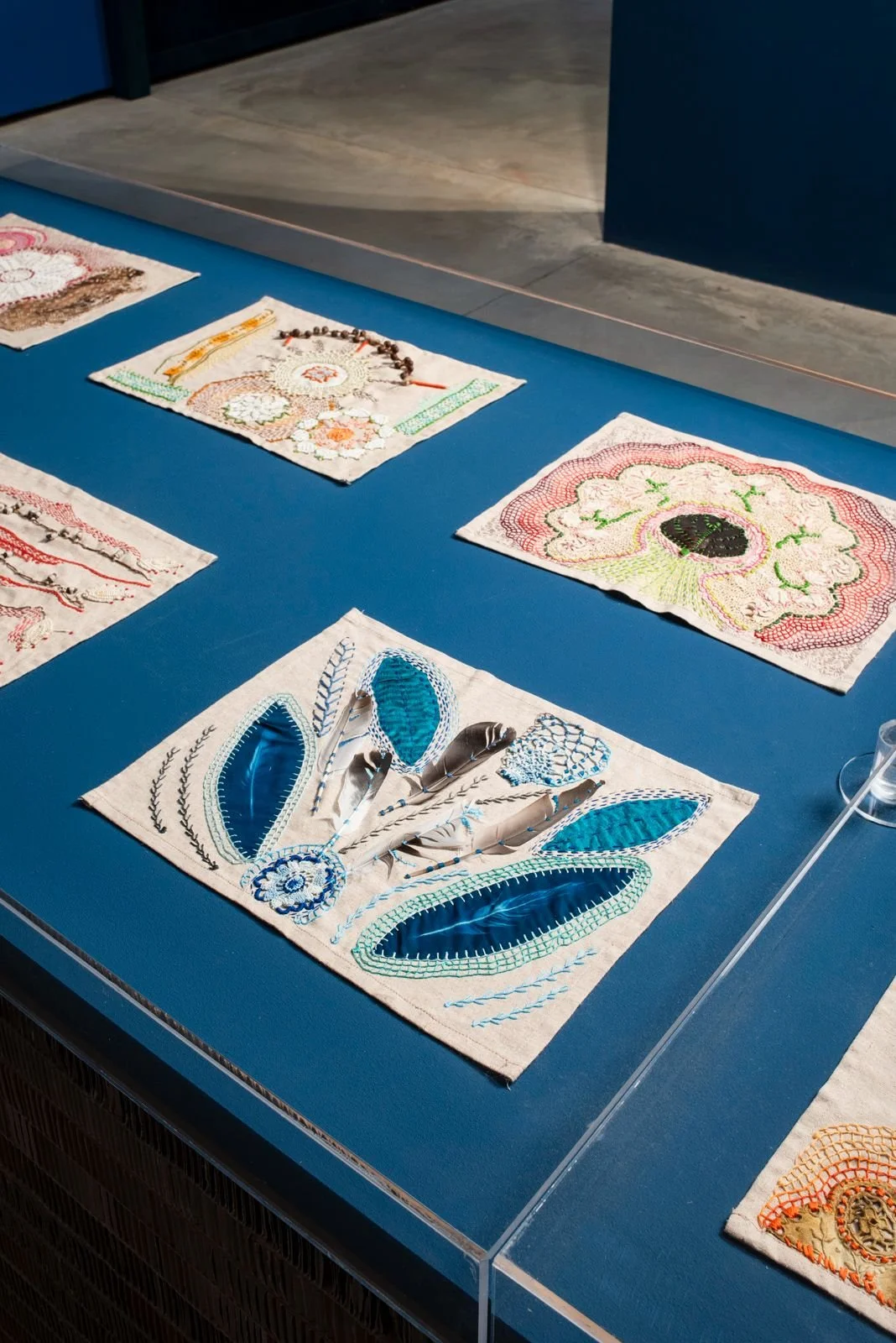
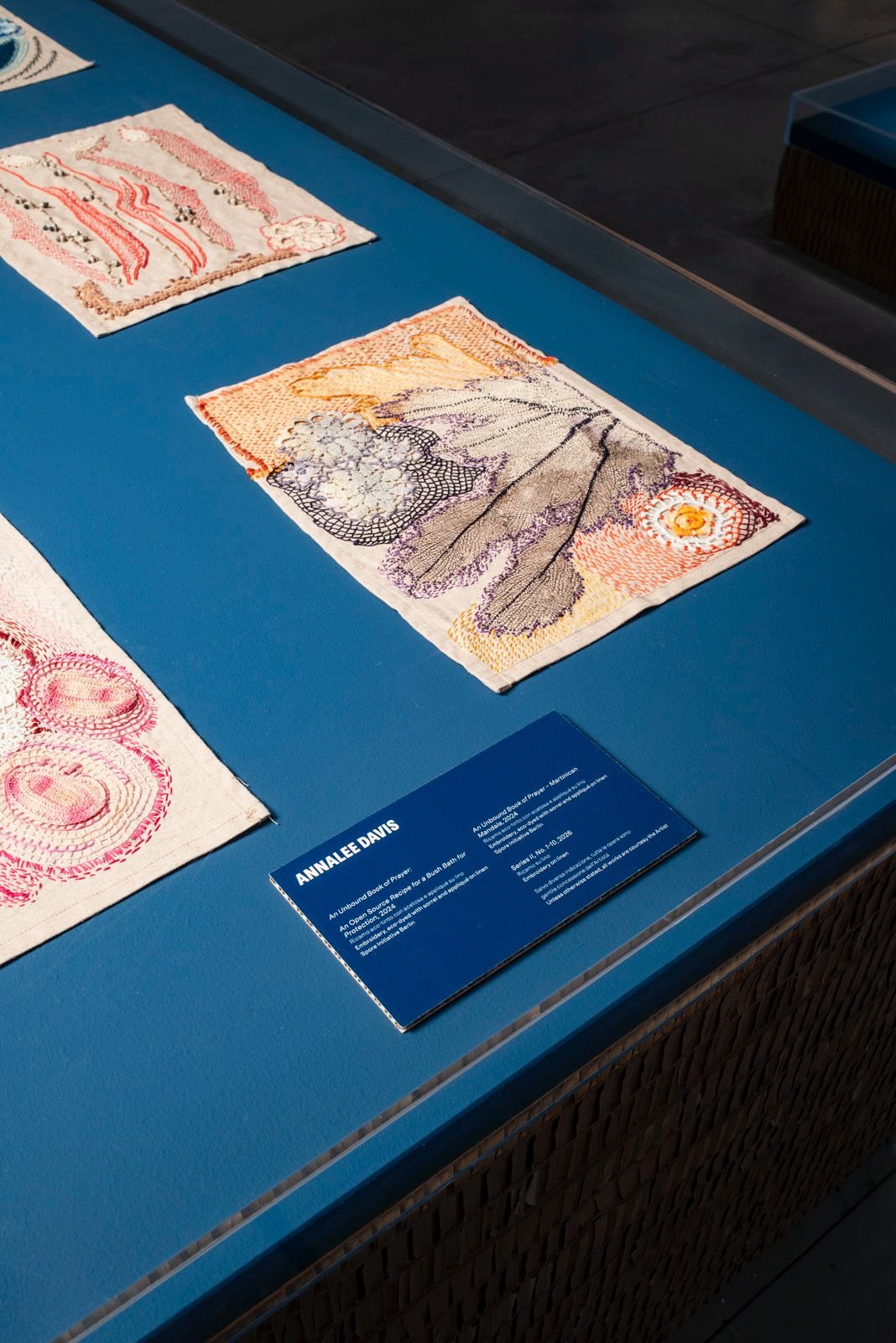
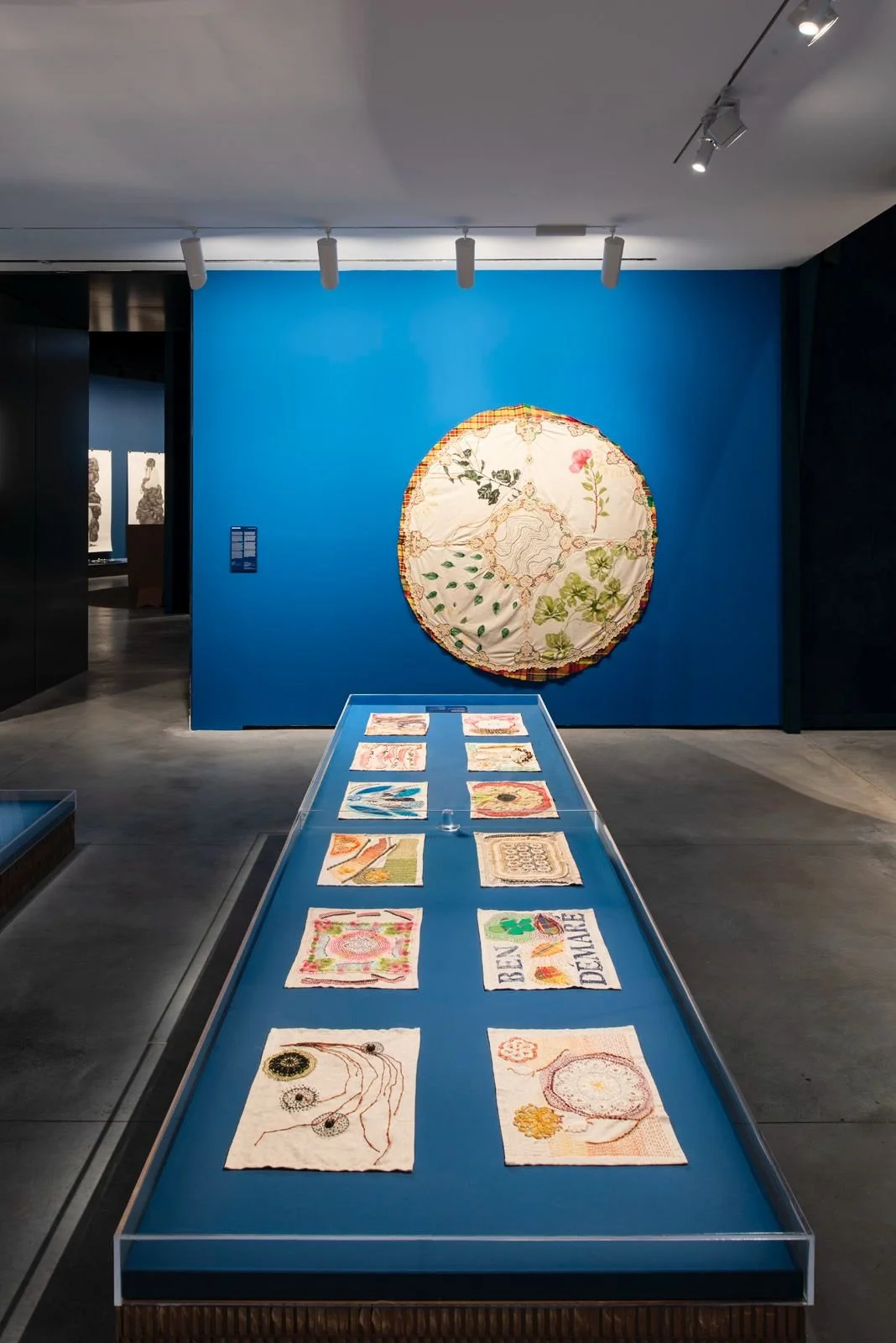
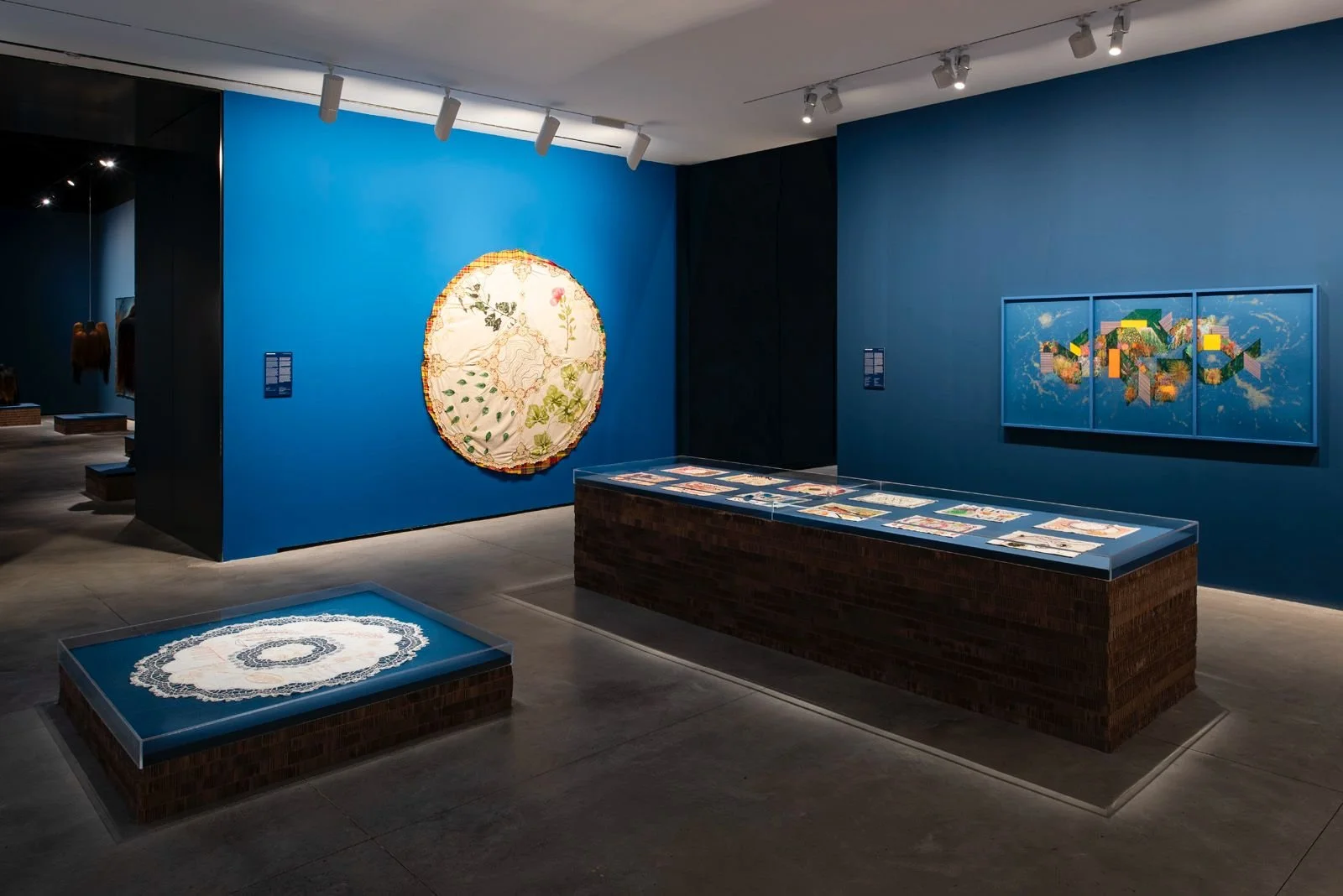
Collection Title: An Unbound Book of Prayer- Series
Year: 2025 - 2026
Medium: Appliqué, crochet, organic material & embroidery on linen
Dimensions: 30 cm x 40 cm
Photo credit: Matteo Losurdo
An Unbound Book of Prayer- Series II (2025–2026) is a series of small textile works crafted with appliqué, crochet, embroidery, dyes, and organic materials gathered from the surrounding landscape of my home and studio, shaping these secular devotional aids.
They respond to a very specific piece of land–the place where I live and work and where my paternal family has lived for five generations. My practice motions to this site’s former incarnation as a seventeenth-century sugar plantation, transformed to a twentieth-century dairy farm currently under transition to an alternate energy farm. This land is at once a witness to history, a tomb, an archive, a regenerator of life, and the place that grounds me–it is a site of belonging and one worthy of veneration.
The material reality of the landscape is evident in the coconut sheath, bird feathers, sea fan, palm tree inflorescence, seeds, and bamboo branches. The making of them quells my anxiety about the ecological and geopolitical angst many of us feel. Unhurried, repetitive meditative stitching would slow my breath, and I would become calmer.
I intend them as a series of daily devotional aids countering the alienation many in the Caribbean feel in relation to a land mediated for more than four centuries by the colonial project’s plantation model, monocrop farming of sugar cane, and organised religion, or the more recent touristification of this archipelago sitting in the belly of the Americas. The series aims to facilitate a relationship with the living world through these secular meditational devices, honouring what grows locally as worthy of attention and worship, suggesting a relationship with a living land that offers possibilities for renewal, rather than dominion over landscapes.
(iii) Be Soft
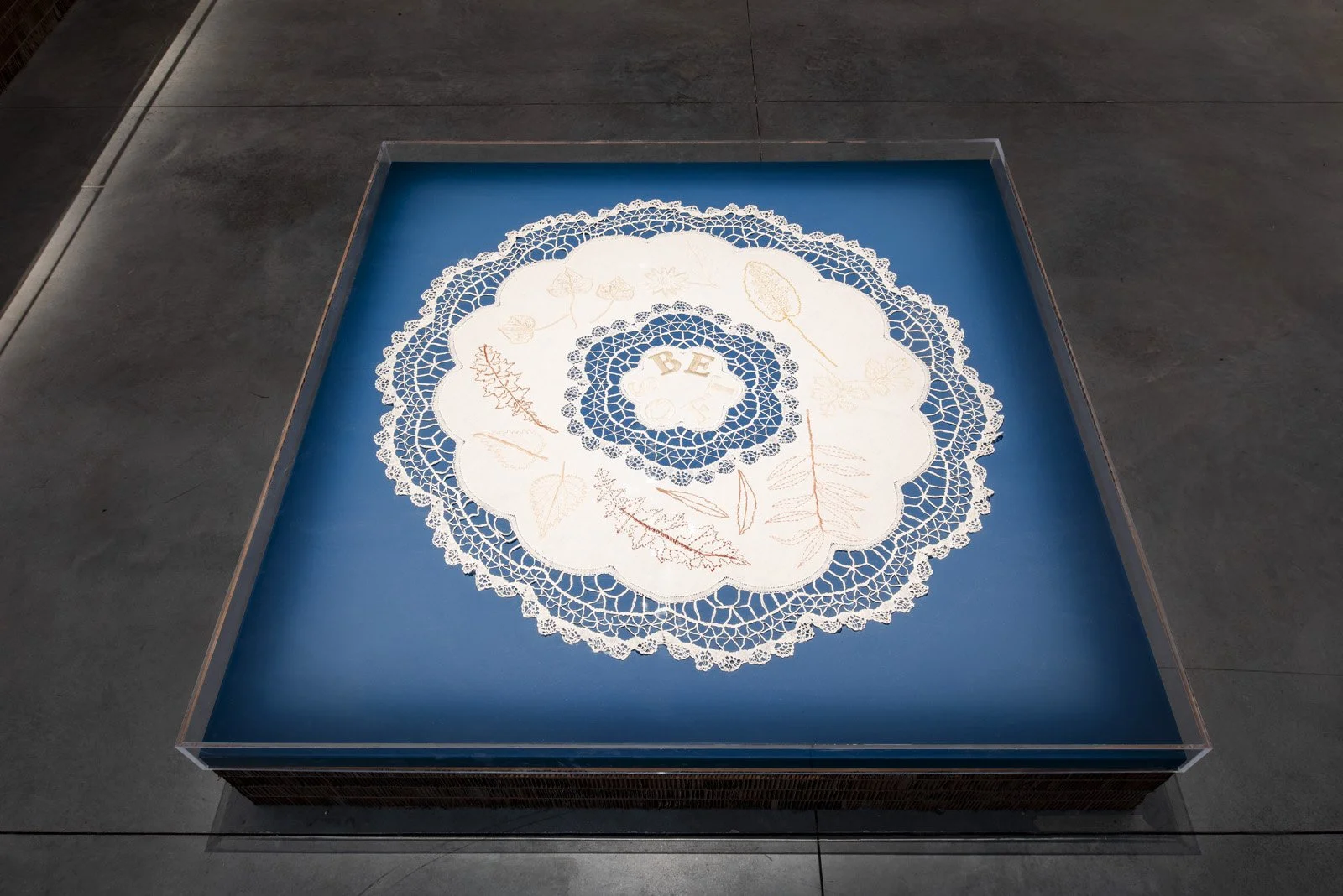
Title: Be Soft
Year: 2023-24
Medium: Embroidery on a 100-year-old piece of Klöppeln (German lace making)
Dimensions: 121 cm diameter
Photo credit: Matteo Losurdo , Venice Biennale 2026
Be Soft. Unhurriedly created, Be Soft is a meditative work acknowledging the climate crisis as both external and internal. A strategy for feeling calm in its making, this circular work extends an invitation for slow-looking, reminiscent of and inspired by the bounty and sacrality of the living world and referencing plants growing outside of my temporary studio while on a 2023 residency at Stiftung Künstlerdorf Schöppingen, Germany.
The use of embroidery acknowledges British sewing traditions that Barbadian women across race and class inherited and practised over centuries, instilling notions of femininity. Rather than producing decorative works for the living room, once the prescribed domain of women, or adorning the surfaces of dressing tables, this slowly made work acknowledges the urgency of these climatic times and the corresponding need to move softly on the earth, our shared mother.
(iv) Bush Bath in the Glasi.
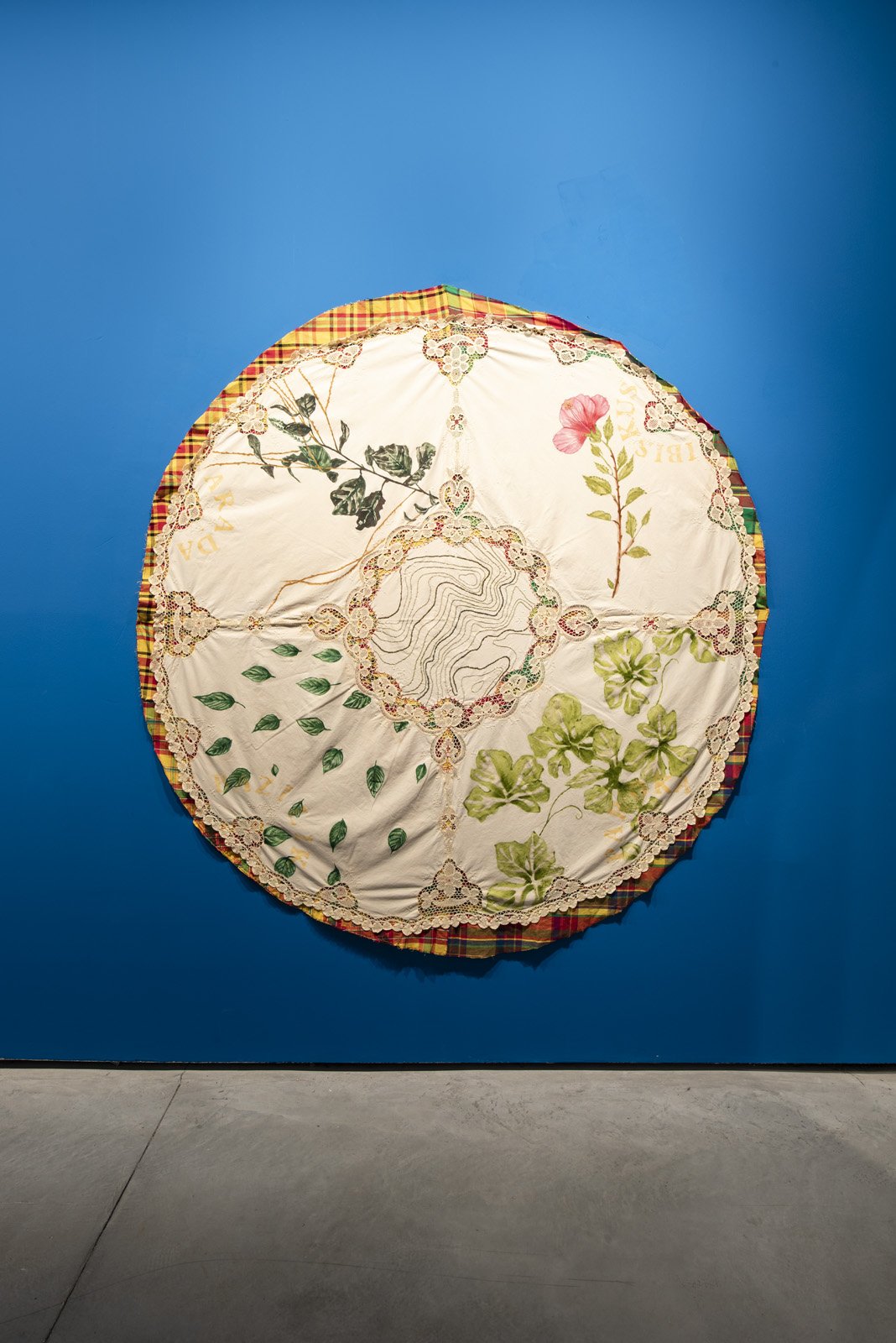
Title: Bush Bath in the Glasi
Year: 2025
Medium: Embroidery, fabric paint on tea-stained tablecloth, Madras fabric,
Dimensions: 152 cm diameter
Photo credit: Matteo Losurdo , Venice Biennale 2026
The Glasi, the name used by Martinicans referring to a spring that is part of the 13 km Rivière du Carbet river flowing into the Caribbean Sea, is frequented by local people who frequent this lush rainforest with its ice-cold and fast-flowing waters for its rejuvenation qualities. This work acknowledges a wide-spread Caribbean practice of African origin to heal with plants in natural water sources including oceans, rivers and streams.
The circular tablecloth backed in Madras fabric offers a bush bath recipe for protection, presenting textile paintings of locally gathered plants–basil, gully root, hibiscus and cerasee. These are typically steeped and used ritualistically to protect, heal, cleanse and detoxify. Grounded in the mountainous terrain of Martininque, the topography of the Glasi is embroidered in the centre of the work with flora emanating from the watery source of health and well-being.
Morning Conversation with AWL Gallery at Palazzo Diedo
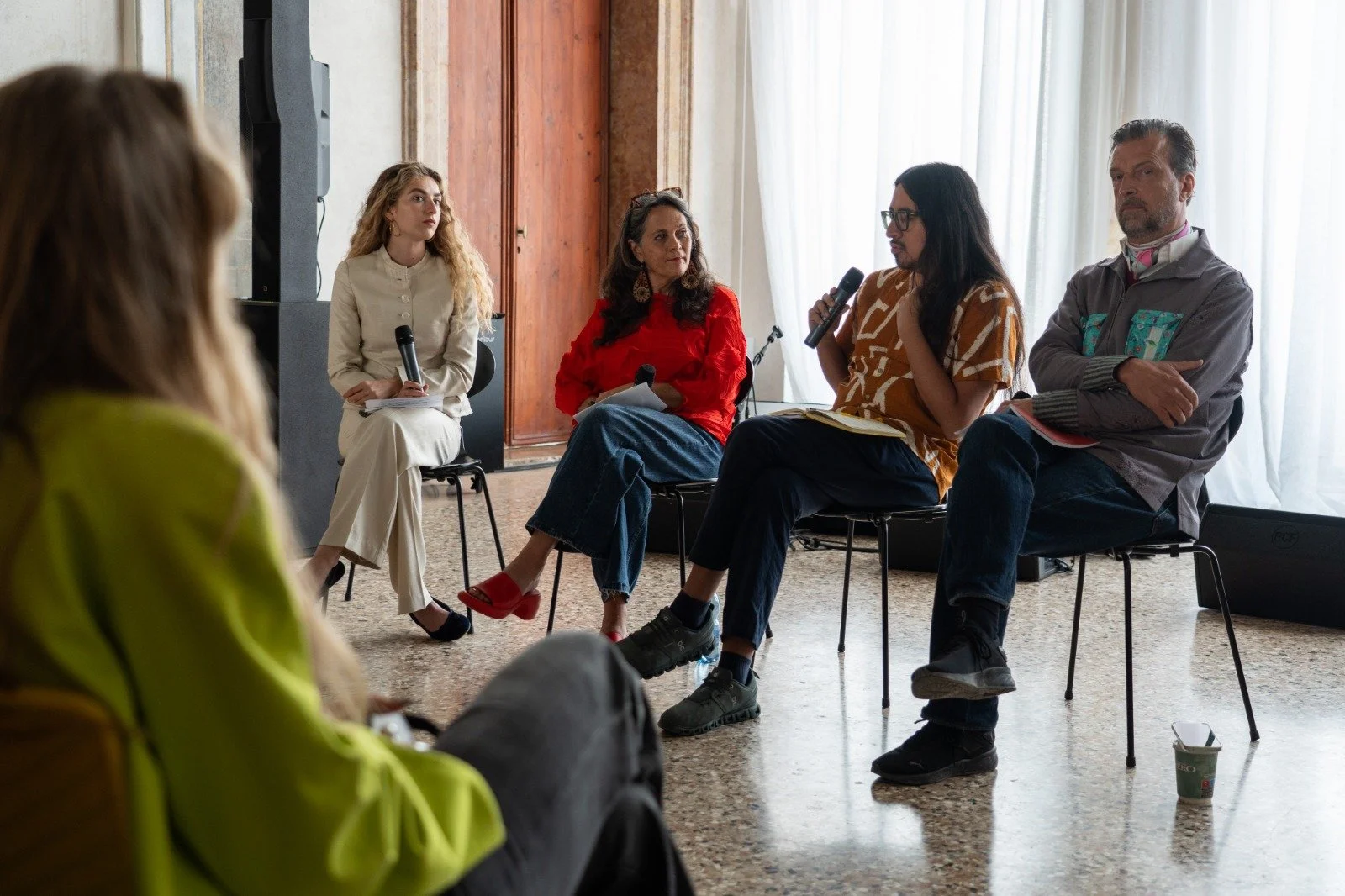
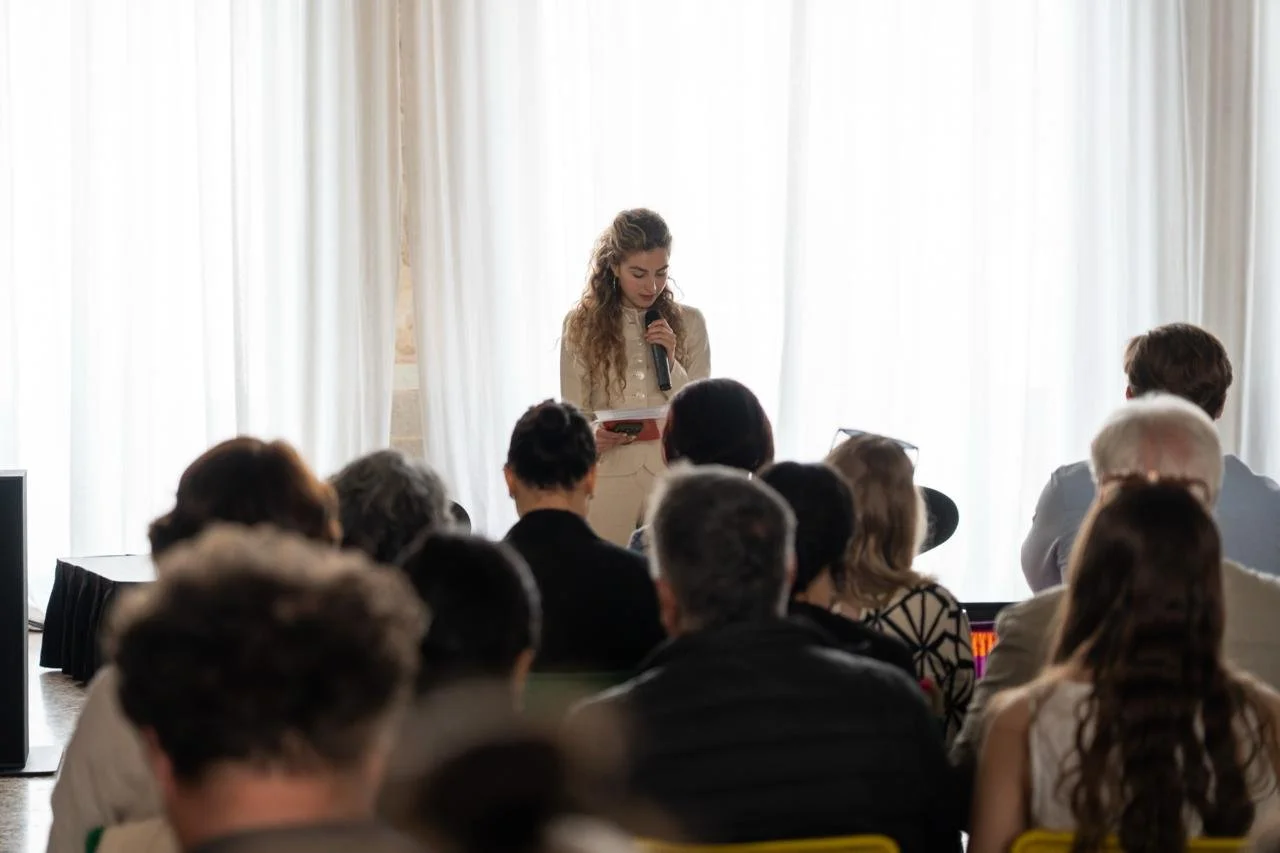
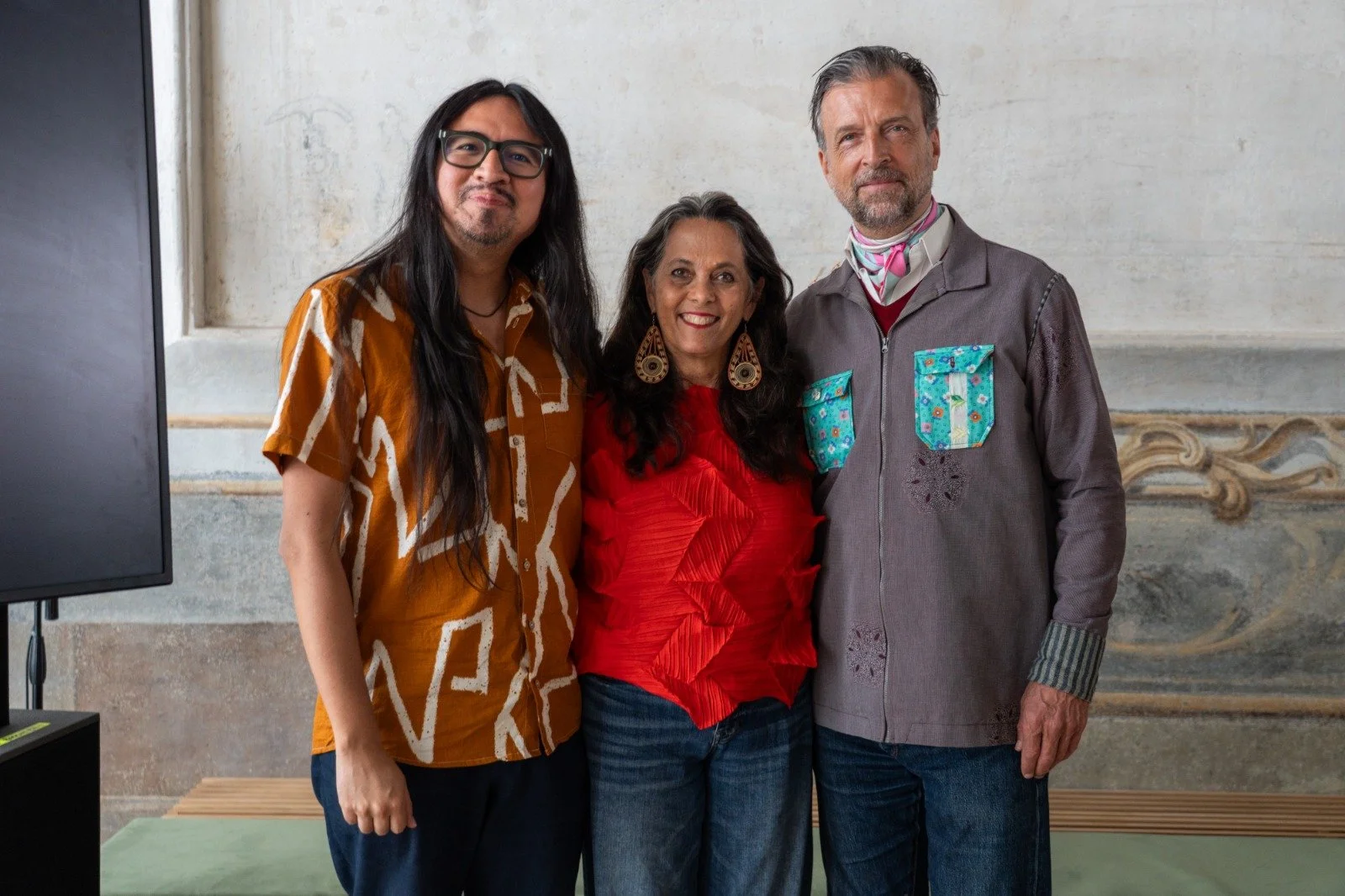
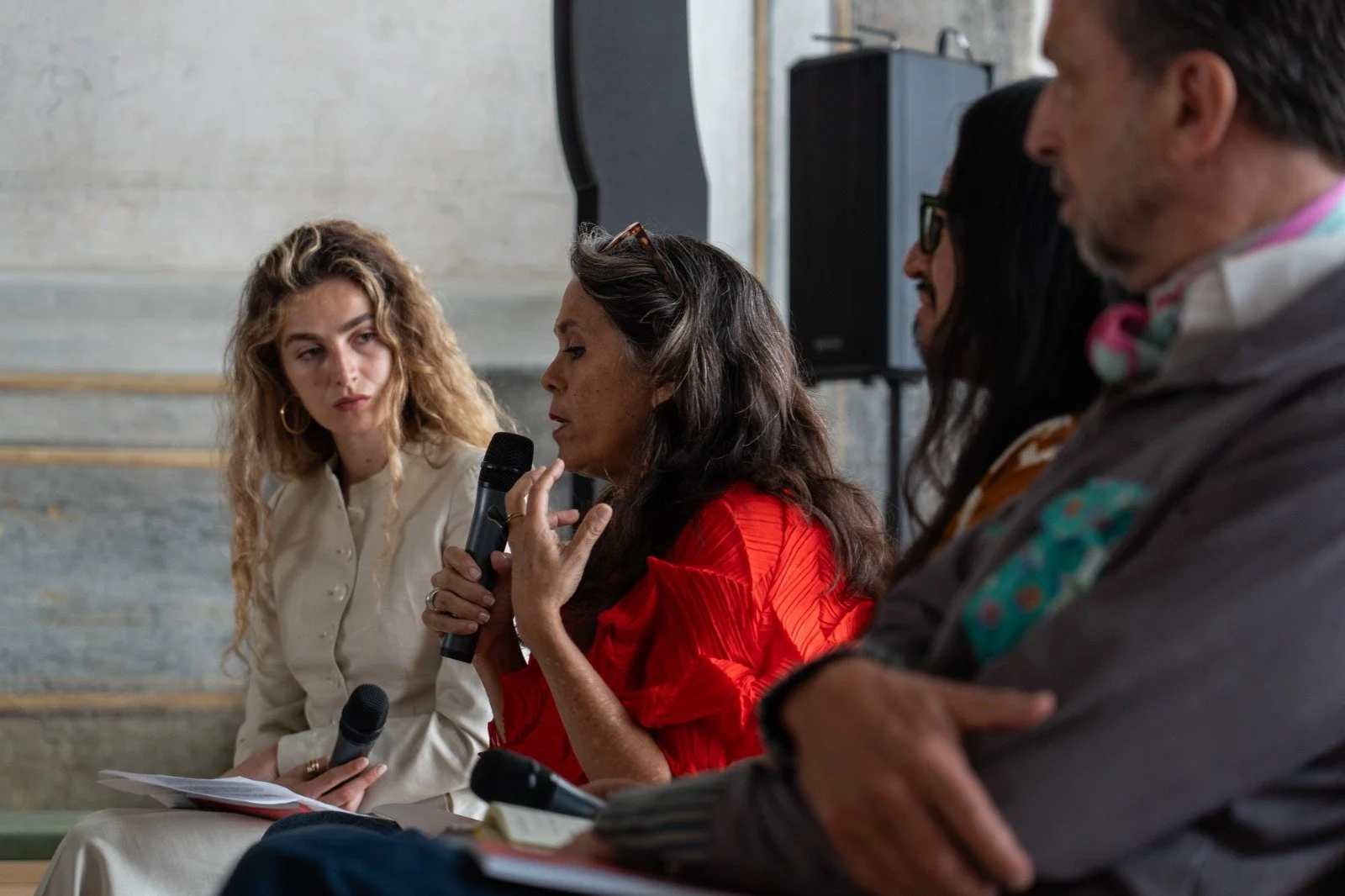
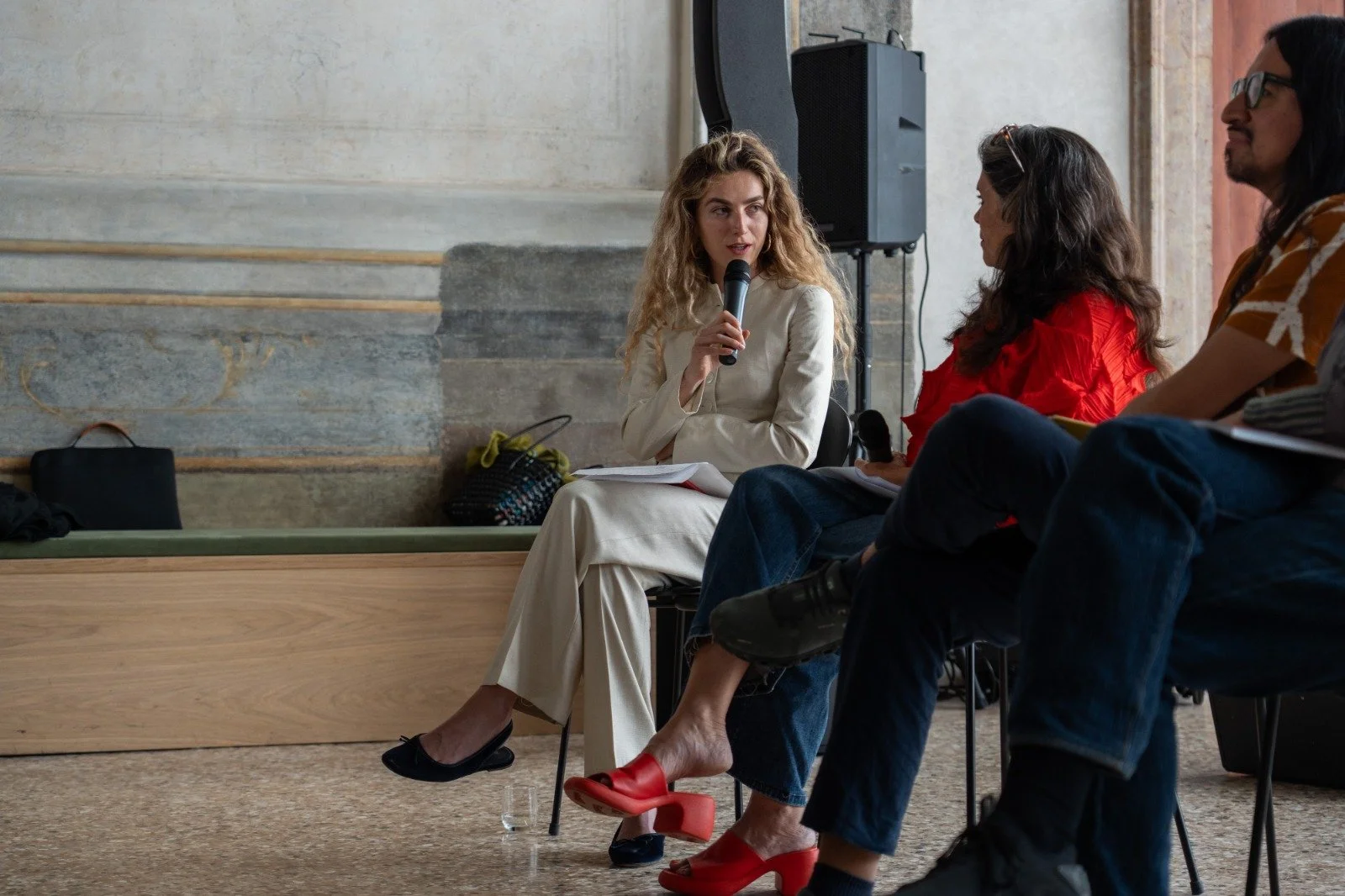
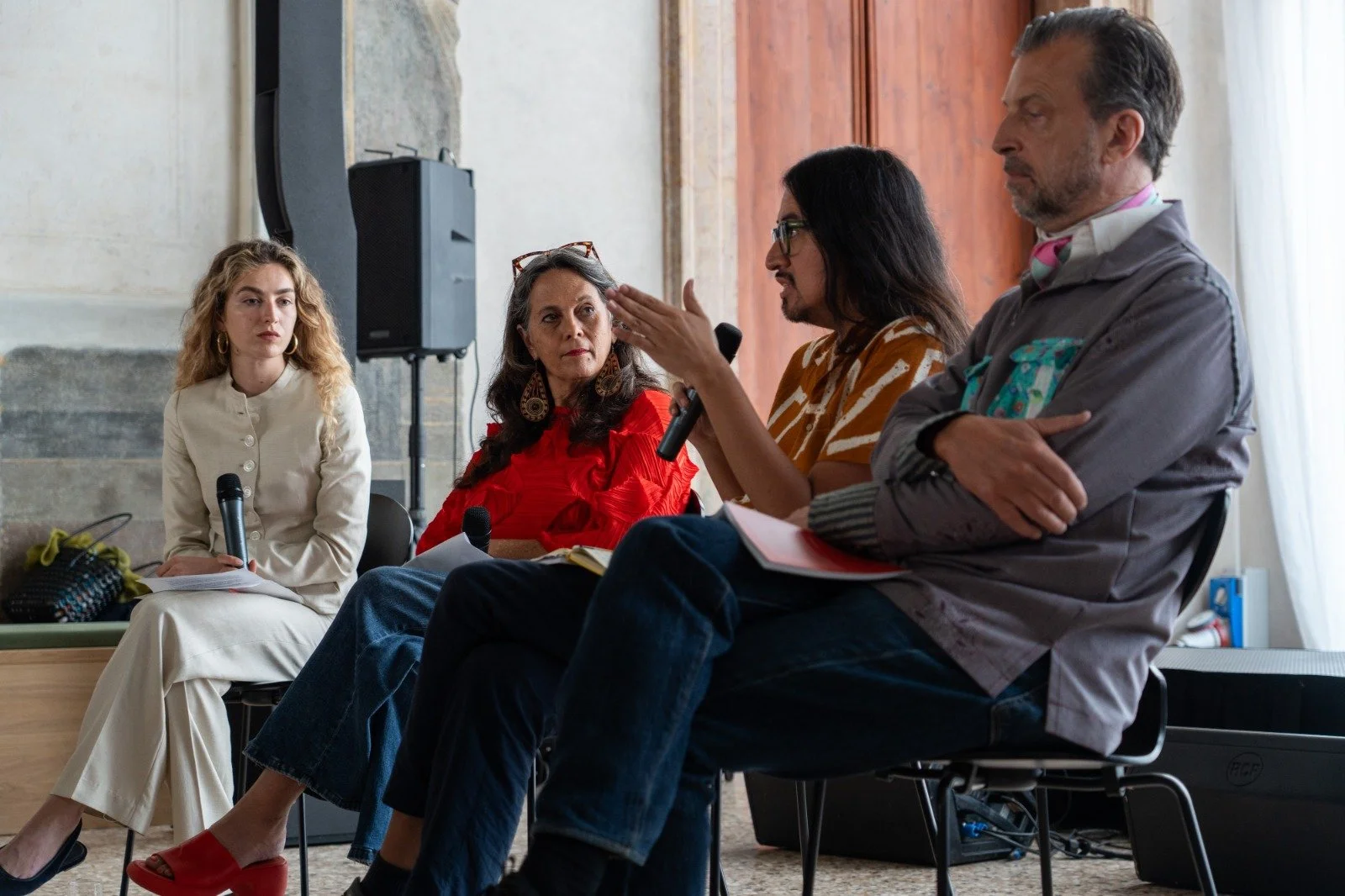
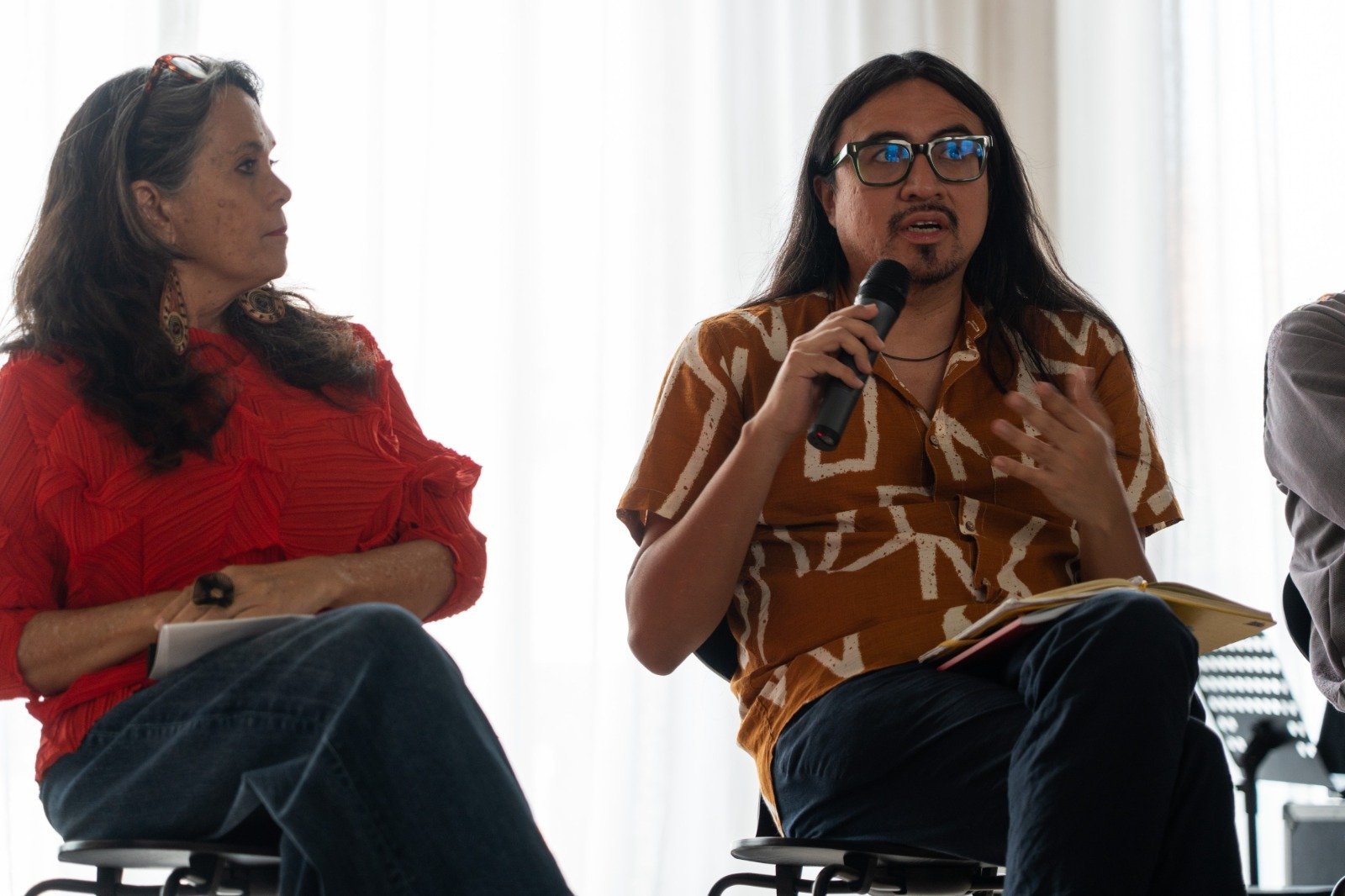
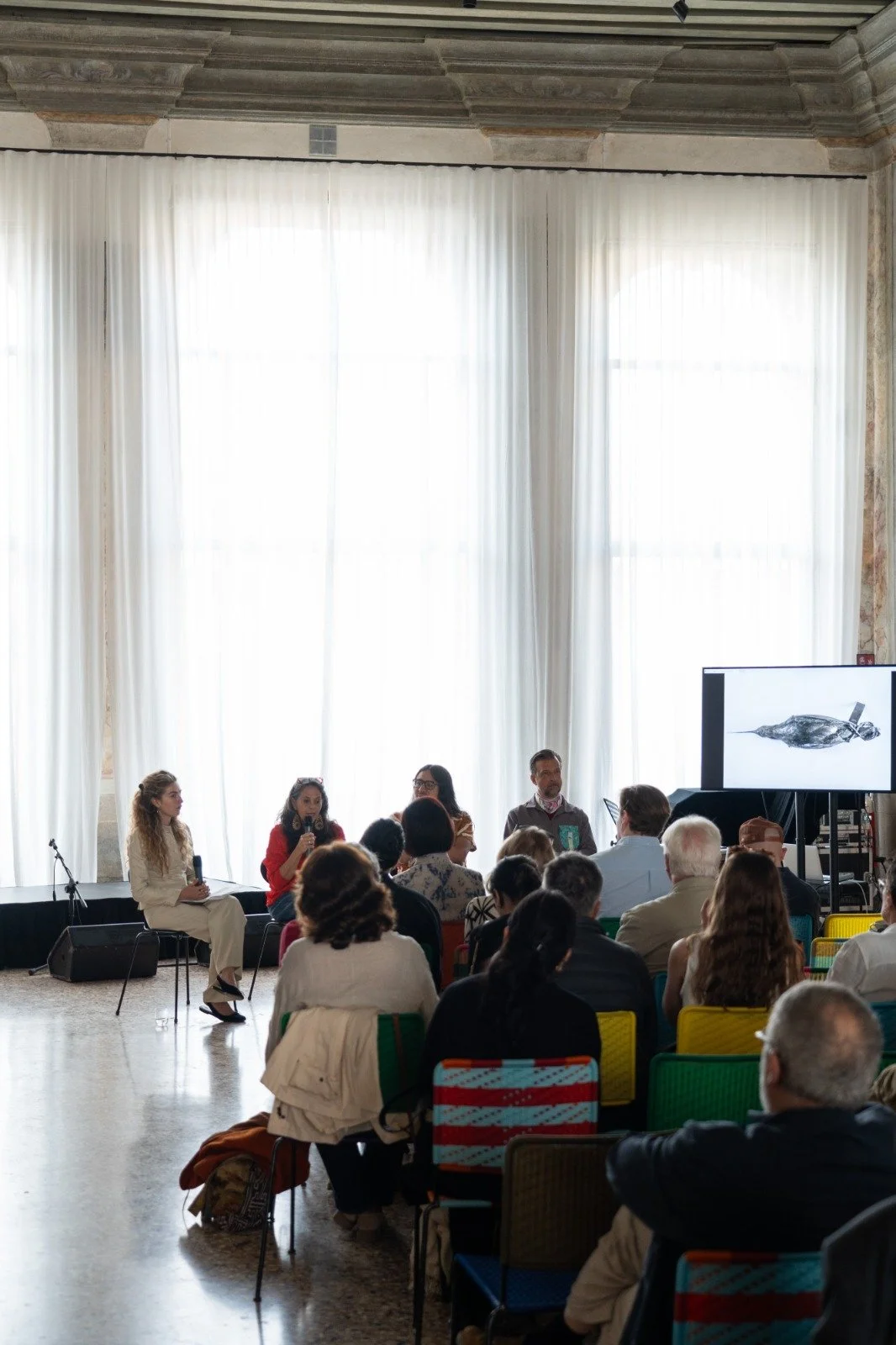
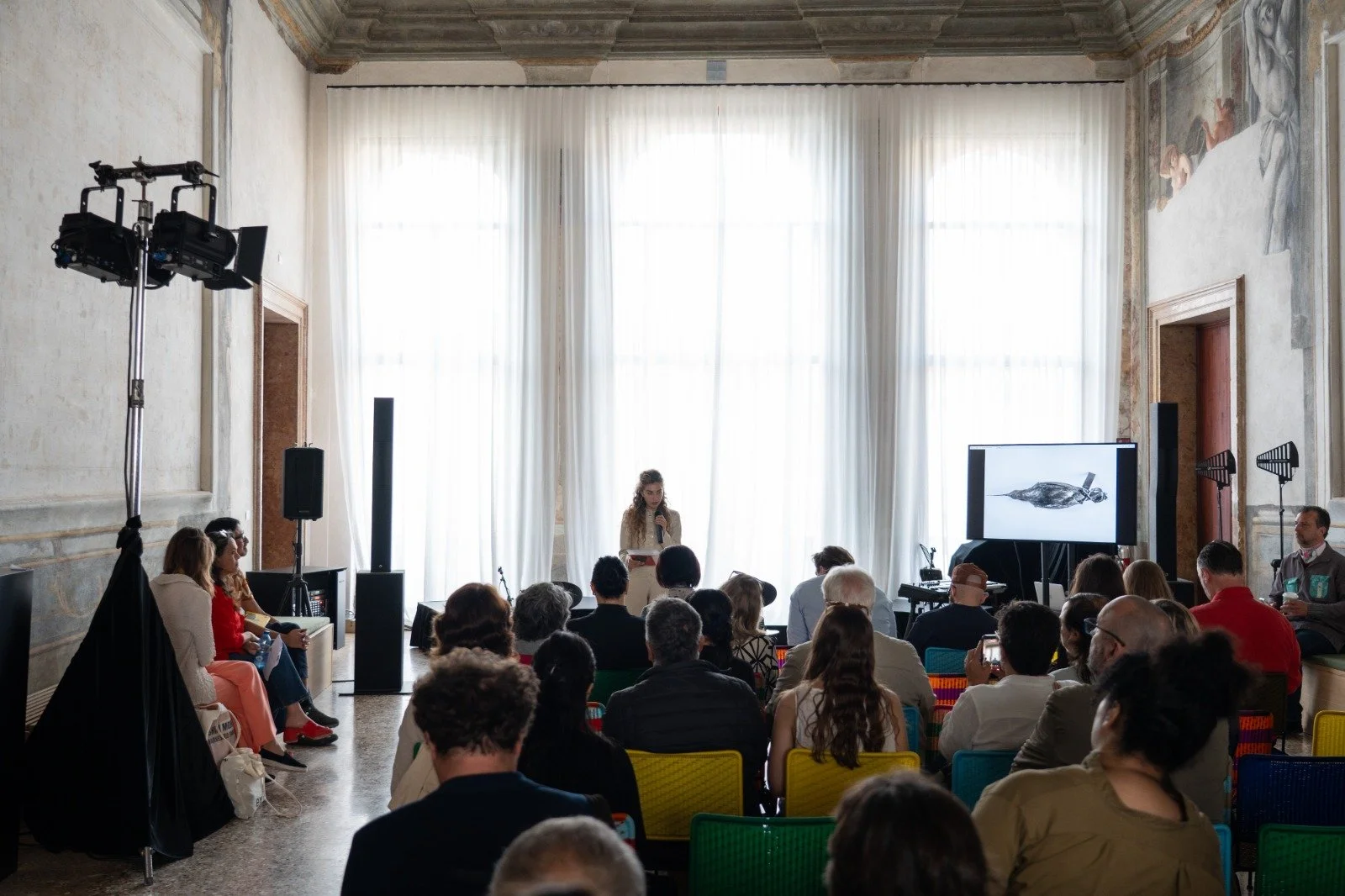
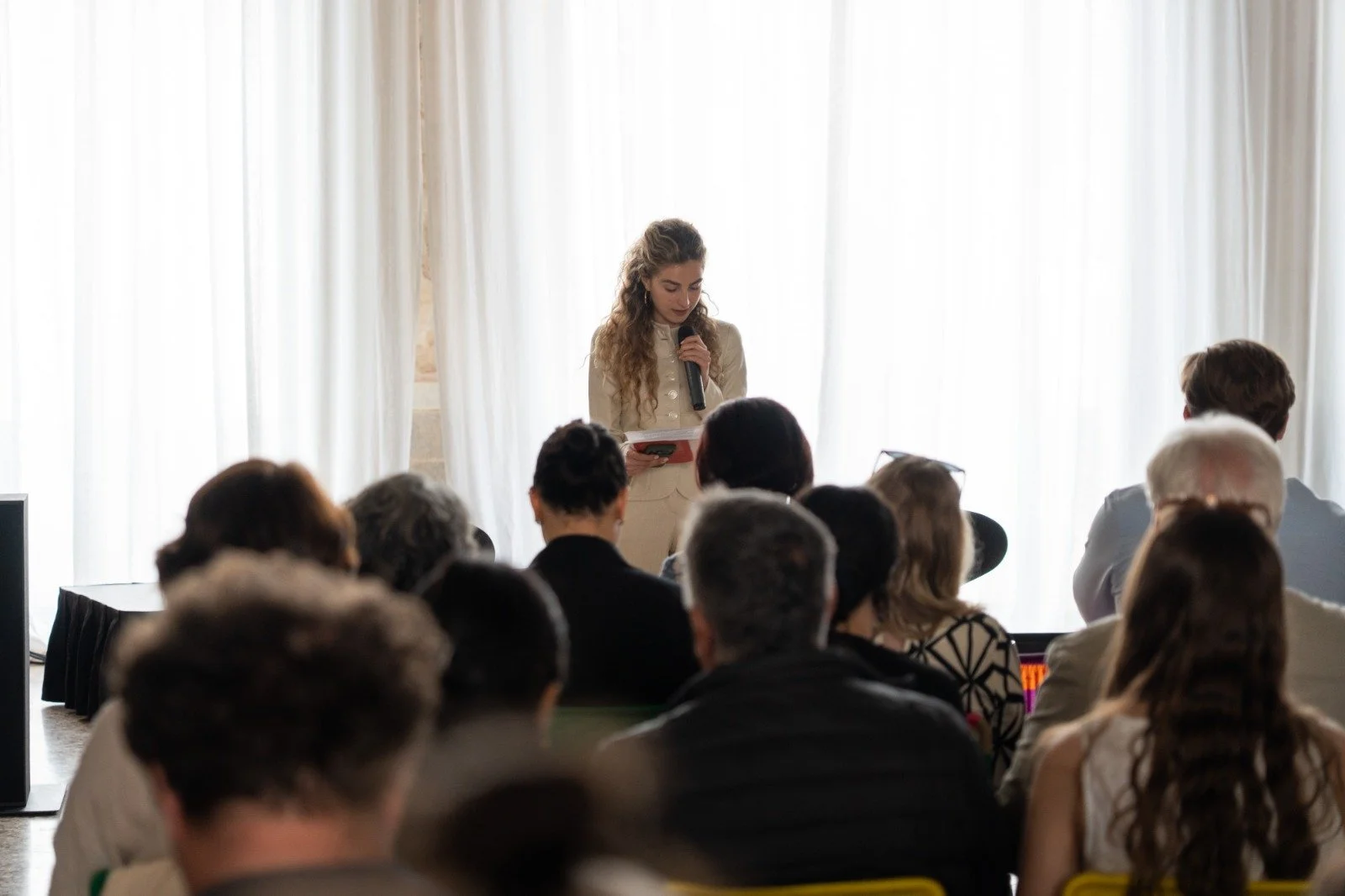
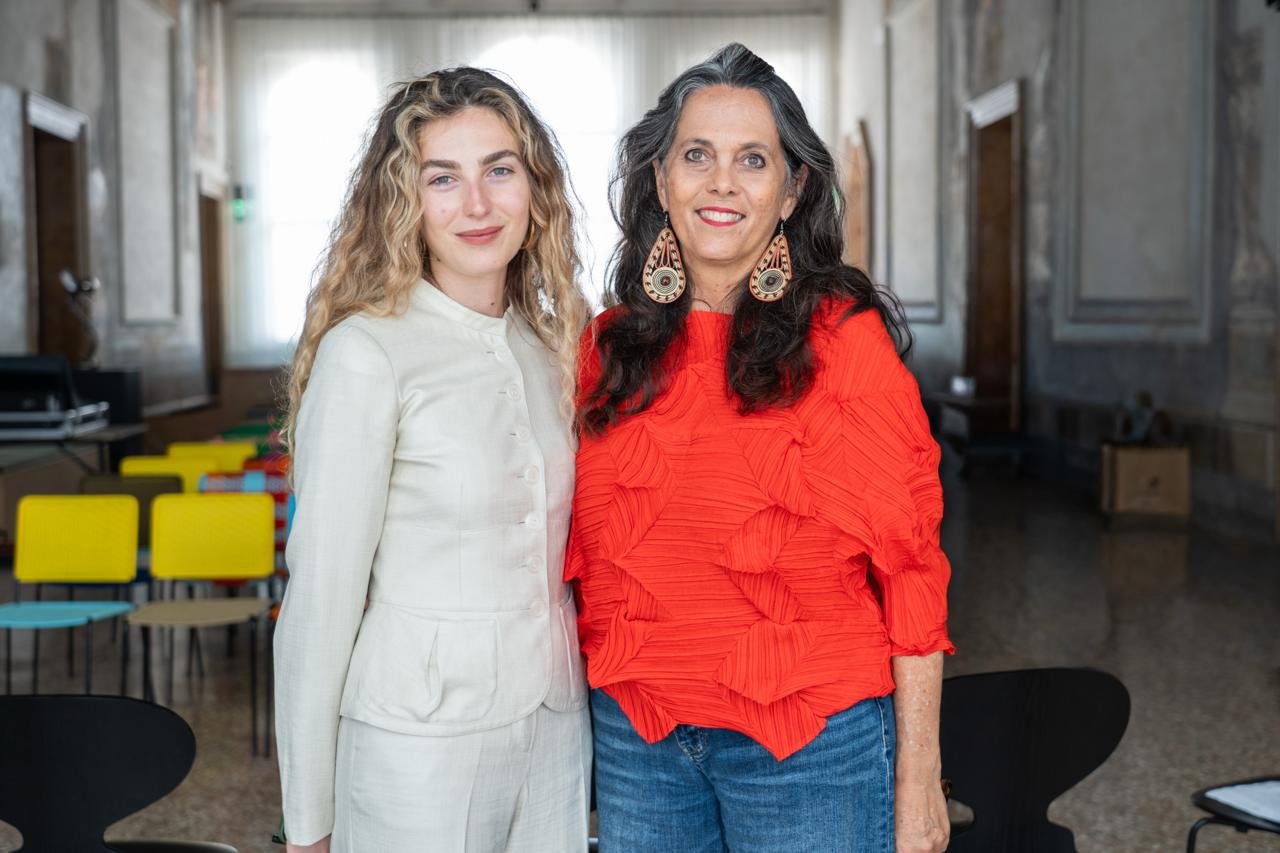
Photo credit: Joan Porcel
On May 8th, as part of the buzz of activities happening during the pre-opening days of the biennale, AWL hosted a conversation between me, Mexico City-based curator Miguel A. López and Brussels-based collector Alain Servais at the Palazzo Diedo - Berggruen Arts & Culture in Venice. Moderated by Ginevra de Blasio, the discussion initially focussed on my works in the Arsenale and the Giardini, expanding to discuss the central ideas in the book Miguel and I co-wrote–On Being Committed to a Small Place– and our first encounter through my work as a cultural activist. Alain shared how he first encountered my work and chose to bring it into his collection while reflecting on the responsibilities that come with collecting works rooted in postcolonial narratives. The event was supported by AWL Gallery, Palazzo Diedo – Berggruen Arts & Culture, SmartStamp and The Brooklyn Rail.
Hyperallergic’s Guide to the 2026 Venice Biennale
Press
Venice Biennale 2026 by Delfina Foundation
Annalee Davis alla Biennale Arte di Venezia 2026. Il paesaggio come lutto, archivio e resistenza nel Padiglione Barbados (Italiano) (English)
Annalee Davis at Biennale Arte 2026. Landscape as Mourning, Archive, and Resistance
Radio GAMeC - Pedagogy of Hope with Annalee Davis
Barbados alla Biennale di Venezia 2026 tra ecologia e memoria
“In Minor Keys” Hits All the Right Notes by HyperAllergic
"What if plants understood the future better than we do?" Annalee Davis's lesson against "Green Colonialism." by Vanity Fair
“Annalee Davis: «Dobbiamo disimparare la piantagione»” by Reve News
Annalee Davis Brings Barbadian Perspectives to the 61st Venice Biennale by Karibbean Kollective
Annalee Davis at The Arsenale at the Venice Biennale by Contemporary Art Library
Necessary Friction: Annalee Davis at the 61st Venice Biennale, Venice by Burnaway
Annalee Davis at the Venice Biennale by Cacique Magazine
Let This Be My Cathedral by Factum Arte
Thank you to the following who have made my participation possible through generous financial support:
Barbados National Art Gallery
Barbados Tourism Marketing Inc.
Anne Bodnar & Jeannie Donovan Fisher
The Clara Lionel Foundation
Vere & Barbara Davis
Karla Harwich
The Panta Rhea Foundation
The Peter Moores Barbados Trust
Special thanks to Dr. Sean Carrington & Burton Ward for their interest in the project and for sharing their knowledge of botany and birds; to Factum Arte for collaborating on production elements of Let This be My Cathedral, especially Damian Rojo for installation support; and to AWL Airas Wang de Lafée for coordinating the conversation event at Palazzo Diedo – Berggruen Arts & Culture. I am very grateful to Rasha Salti, Curatorial Advisor, and Rory Tsapayi, Research Assistant, for the attention, care, courage, and support they offered me, and to the wider curatorial team, including Gabe Beckhurst Feijoo, Marie Hélène Pereira, and Siddhartha Mitter. Huge gratitude to Claire Breukel for her incredible fundraising support, which made so much possible Thanks to Olive Senior for giving me permission to include her moving poem, Birdshooting Season. Finally, big thanks to the students from Accademia di Belle Arti di Venezia for their assistance during installation
